Transfer pricing and tax deductions upheld on established principles, while employee contributions and warranty provisions returned for fresh examinat...
Captive transfer pricing relies on industrial consumer tariffs, while genuine quotations can benchmark effluent treatment transfers under the Other Me...
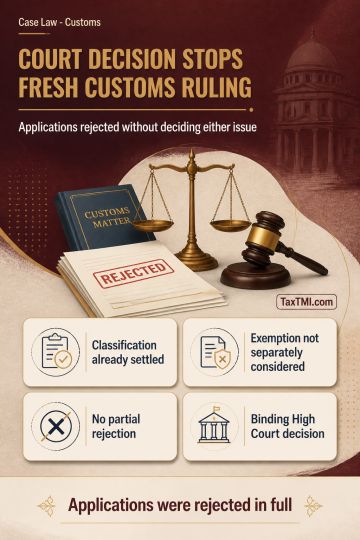
Specific tariff classification for ophthalmic instruments and extended limitation principles determine the treatment of duty demands, confiscation, an...
Integrated golf function determines classification, placing launch monitors and simulators under other golf equipment rather than measuring instrument...
Public servant status under anti-corruption law extends to recognised stock exchange leadership; constitutional and sanction challenges do not succeed...
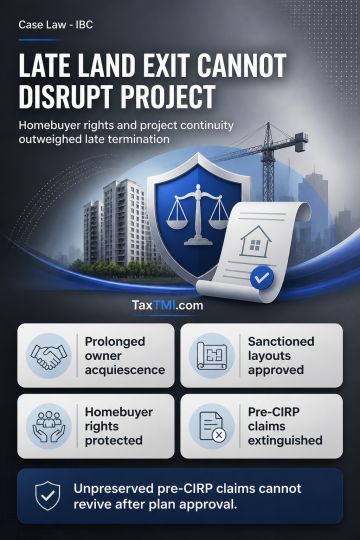
Acquiescence, homebuyer protection and clean-slate resolution principles prevent landowners from disrupting an integrated project through late termina...
The case involved the determination of penalty u/s 69(1)(k) of the J&K Value Added Tax Act, 2005 for the issuance of 35 improper invoices on the same day. The High Court held that each tax invoice, if found to be in default, attracts a penalty of ten times the tax payable on that invoice or Rs. 10,000, whichever is higher. The court clarified that the penalty is meant to deter VAT dealers from under-assessing or evading tax liabilities. It emphasized that the penalty is to be applied to each individual tax invoice, not based on the total number of invoices generated in a day. The court rejected the notion of penalizing based on the accumulation of invoices for a specific day. Each default on a tax invoice is to be penalized independently as per the provisions of the VAT Act.
The case involved the determination of penalty u/s 69(1)(k) of the J&K Value Added Tax Act, 2005 for the issuance of 35 improper invoices on the same day. The High Court held that each tax invoice, if found to be in default, attracts a penalty of ten times the tax payable on that invoice or Rs. 10,000, whichever is higher. The court clarified that the penalty is meant to deter VAT dealers from under-assessing or evading tax liabilities. It emphasized that the penalty is to be applied to each individual tax invoice, not based on the total number of invoices generated in a day. The court rejected the notion of penalizing based on the accumulation of invoices for a specific day. Each default on a tax invoice is to be penalized independently as per the provisions of the VAT Act.
Note: It is a system-generated summary and is for quick reference only.
 TaxTMI
 of 4805



















 Join Channel


 TaxTMI