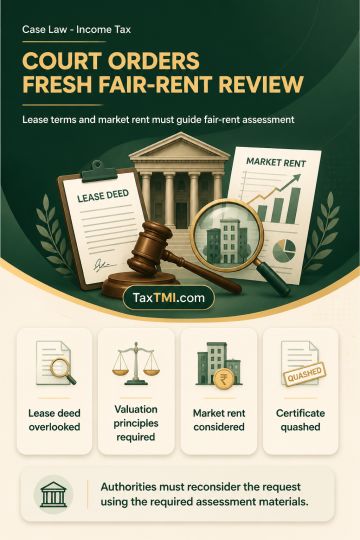
Fair-rent assessment requires consideration of lease terms, valuation principles and prevailing market rent; the certificate was quashed for fresh rev...
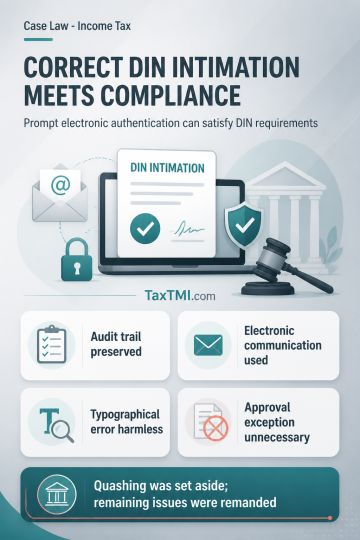
Document Identification Number compliance is satisfied when electronically communicated orders are promptly authenticated through a correctly identifi...
The case involved the determination of penalty u/s 69(1)(k) of the J&K Value Added Tax Act, 2005 for the issuance of 35 improper invoices on the same day. The High Court held that each tax invoice, if found to be in default, attracts a penalty of ten times the tax payable on that invoice or Rs. 10,000, whichever is higher. The court clarified that the penalty is meant to deter VAT dealers from under-assessing or evading tax liabilities. It emphasized that the penalty is to be applied to each individual tax invoice, not based on the total number of invoices generated in a day. The court rejected the notion of penalizing based on the accumulation of invoices for a specific day. Each default on a tax invoice is to be penalized independently as per the provisions of the VAT Act.
The case involved the determination of penalty u/s 69(1)(k) of the J&K Value Added Tax Act, 2005 for the issuance of 35 improper invoices on the same day. The High Court held that each tax invoice, if found to be in default, attracts a penalty of ten times the tax payable on that invoice or Rs. 10,000, whichever is higher. The court clarified that the penalty is meant to deter VAT dealers from under-assessing or evading tax liabilities. It emphasized that the penalty is to be applied to each individual tax invoice, not based on the total number of invoices generated in a day. The court rejected the notion of penalizing based on the accumulation of invoices for a specific day. Each default on a tax invoice is to be penalized independently as per the provisions of the VAT Act.
Note: It is a system-generated summary and is for quick reference only.
 TaxTMI
 of 4803







 Join Channel


 TaxTMI