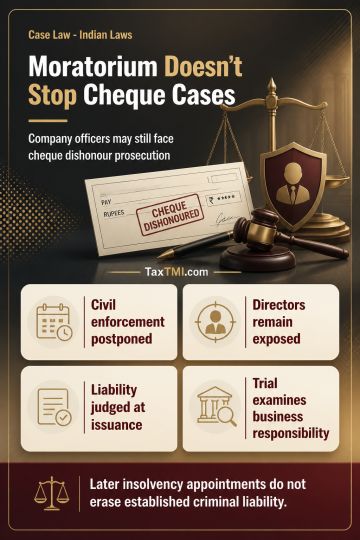
Insolvency moratorium does not shield company officers from cheque dishonour prosecution for liability arising before corporate insolvency proceedings...
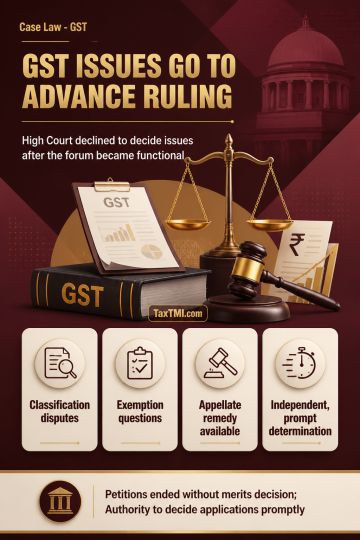
Advance-ruling mechanism governs pending GST classification, exemption and taxability disputes, limiting writ review once the specialised forum functi...
The case involved the determination of penalty u/s 69(1)(k) of the J&K Value Added Tax Act, 2005 for the issuance of 35 improper invoices on the same day. The High Court held that each tax invoice, if found to be in default, attracts a penalty of ten times the tax payable on that invoice or Rs. 10,000, whichever is higher. The court clarified that the penalty is meant to deter VAT dealers from under-assessing or evading tax liabilities. It emphasized that the penalty is to be applied to each individual tax invoice, not based on the total number of invoices generated in a day. The court rejected the notion of penalizing based on the accumulation of invoices for a specific day. Each default on a tax invoice is to be penalized independently as per the provisions of the VAT Act.
The case involved the determination of penalty u/s 69(1)(k) of the J&K Value Added Tax Act, 2005 for the issuance of 35 improper invoices on the same day. The High Court held that each tax invoice, if found to be in default, attracts a penalty of ten times the tax payable on that invoice or Rs. 10,000, whichever is higher. The court clarified that the penalty is meant to deter VAT dealers from under-assessing or evading tax liabilities. It emphasized that the penalty is to be applied to each individual tax invoice, not based on the total number of invoices generated in a day. The court rejected the notion of penalizing based on the accumulation of invoices for a specific day. Each default on a tax invoice is to be penalized independently as per the provisions of the VAT Act.
Note: It is a system-generated summary and is for quick reference only.
 TaxTMI
 of 4801




 Join Channel


 TaxTMI