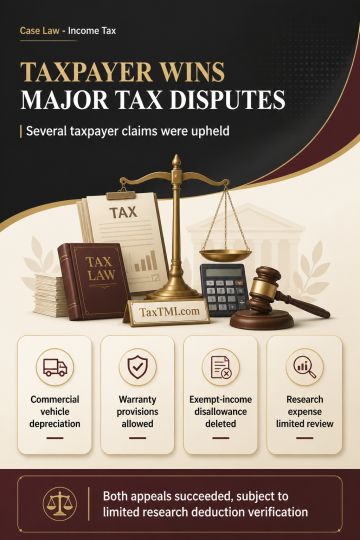
Commercial vehicle depreciation, scientifically determined warranty provisions and exempt-income disallowances were resolved in favour of the taxpayer...
Inherited property sale proceeds require capital-gains treatment where ownership is supported by evidence, not suspicion or unverified signature doubt...
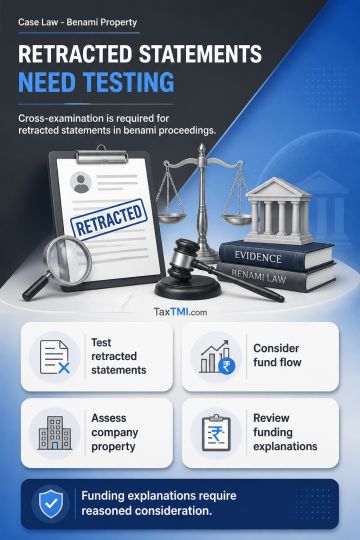
Cross-examination of retracted statements is essential where foundational evidence supports a benami allegation and documented funding explanations re...
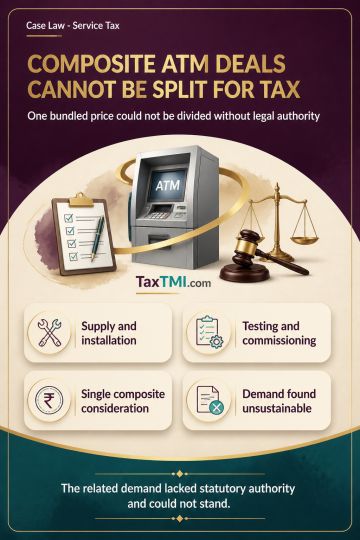
Capital-goods exemption covers plant-modernisation accessories, while the import restriction applies only to earlier capital-goods components and spar...
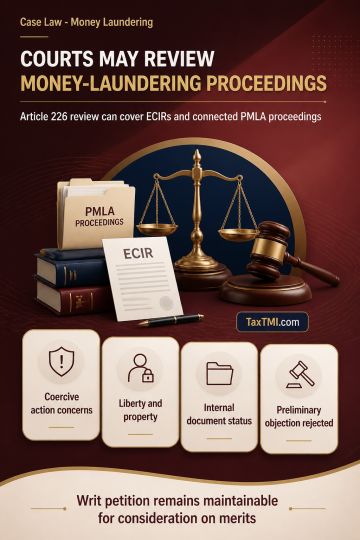
Constitutional judicial review permits challenges to ECIRs and connected money-laundering proceedings where coercive action affects fundamental intere...
The Supreme Court examined the validity of a guideline issued by the Institute of Chartered Accountants of India (ICAI) imposing a numerical restriction on the maximum number of tax audits a Chartered Accountant can accept u/s 44AB of the IT Act, 1961. The Court held that the Council of ICAI, under the 1949 Act, had the legal competence to impose such guidelines to regulate the profession of Chartered Accountants. The restriction was deemed reasonable and in the public interest to maintain the quality of tax audits. The Court quashed disciplinary proceedings against Chartered Accountants for breaching the guideline, citing uncertainty in the law due to the quashing of the earlier guideline. The Court reserved liberty for ICAI to enhance the specified number of tax audits in the future. The guideline was deemed not to be given effect until 01.04.2024. The Court disposed of the writ petitions accordingly, with liberty for representations to be made regarding any future amendments to the
The Supreme Court examined the validity of a guideline issued by the Institute of Chartered Accountants of India (ICAI) imposing a numerical restriction on the maximum number of tax audits a Chartered Accountant can accept u/s 44AB of the IT Act, 1961. The Court held that the Council of ICAI, under the 1949 Act, had the legal competence to impose such guidelines to regulate the profession of Chartered Accountants. The restriction was deemed reasonable and in the public interest to maintain the quality of tax audits. The Court quashed disciplinary proceedings against Chartered Accountants for breaching the guideline, citing uncertainty in the law due to the quashing of the earlier guideline. The Court reserved liberty for ICAI to enhance the specified number of tax audits in the future. The guideline was deemed not to be given effect until 01.04.2024. The Court disposed of the writ petitions accordingly, with liberty for representations to be made regarding any future amendments to the
Note: It is a system-generated summary and is for quick reference only.
 TaxTMI
 of 4782












 Join Channel


 TaxTMI
