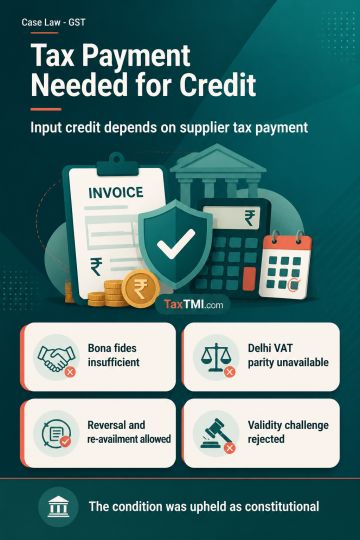
Input tax credit conditions remain constitutionally valid, with eligible recipient claims considered under GST circulars and retrospective filing dead...
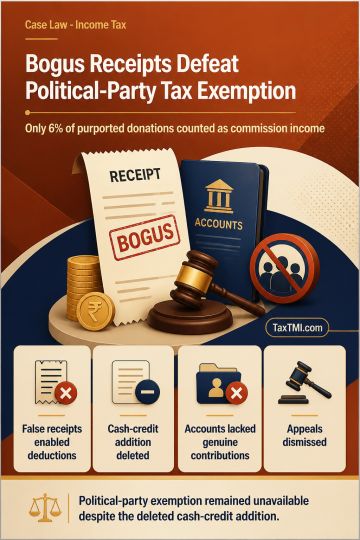
Bogus donation receipts justified commission income assessment and defeated political-party tax exemption for inaccurate accounts and reporting failur...
Pure reimbursement without income element escapes tax withholding, while delayed withholding and unsupported provisions face deferred or renewed scrut...
Public benefit requirement defeats charitable registration where residents' association services are reciprocal, member-only facilities governed by mu...
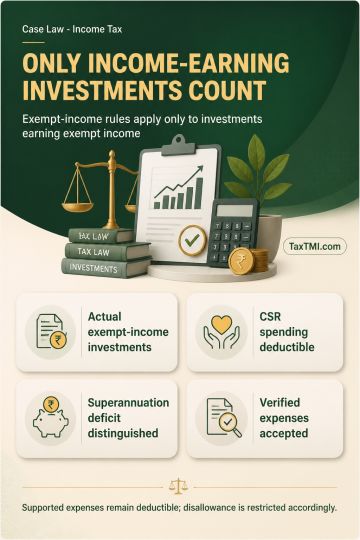
Exempt-income expenditure disallowance is confined to investments that actually generated exempt income, while supported business expenses remain dedu...
The Supreme Court examined the validity of a guideline issued by the Institute of Chartered Accountants of India (ICAI) imposing a numerical restriction on the maximum number of tax audits a Chartered Accountant can accept u/s 44AB of the IT Act, 1961. The Court held that the Council of ICAI, under the 1949 Act, had the legal competence to impose such guidelines to regulate the profession of Chartered Accountants. The restriction was deemed reasonable and in the public interest to maintain the quality of tax audits. The Court quashed disciplinary proceedings against Chartered Accountants for breaching the guideline, citing uncertainty in the law due to the quashing of the earlier guideline. The Court reserved liberty for ICAI to enhance the specified number of tax audits in the future. The guideline was deemed not to be given effect until 01.04.2024. The Court disposed of the writ petitions accordingly, with liberty for representations to be made regarding any future amendments to the
The Supreme Court examined the validity of a guideline issued by the Institute of Chartered Accountants of India (ICAI) imposing a numerical restriction on the maximum number of tax audits a Chartered Accountant can accept u/s 44AB of the IT Act, 1961. The Court held that the Council of ICAI, under the 1949 Act, had the legal competence to impose such guidelines to regulate the profession of Chartered Accountants. The restriction was deemed reasonable and in the public interest to maintain the quality of tax audits. The Court quashed disciplinary proceedings against Chartered Accountants for breaching the guideline, citing uncertainty in the law due to the quashing of the earlier guideline. The Court reserved liberty for ICAI to enhance the specified number of tax audits in the future. The guideline was deemed not to be given effect until 01.04.2024. The Court disposed of the writ petitions accordingly, with liberty for representations to be made regarding any future amendments to the
Note: It is a system-generated summary and is for quick reference only.
 TaxTMI
 of 4786












 Join Channel


 TaxTMI