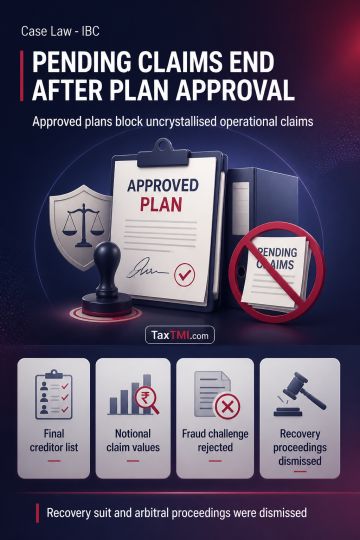
Clean slate principle extinguishes uncrystallised operational claims and bars continuation of pending recovery and arbitral proceedings after plan app...
Works contract classification governs composite layout-development contracts where VAT-paid goods are transferred alongside construction and infrastru...
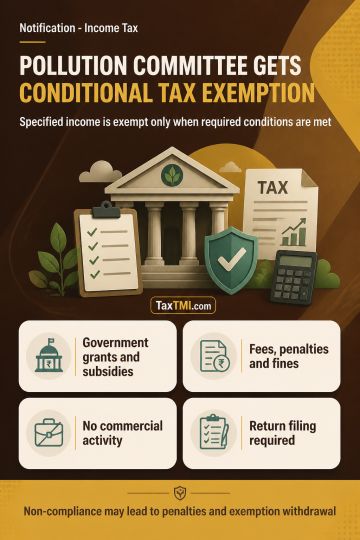
Specified income tax exemption for pollution control body remains conditional on non-commercial activity, unchanged income character, and return filin...
Jurisdictional facts in certificate-of-origin discrepancies can support customs show-cause proceedings, leaving factual explanations for departmental ...
In the case of 2024 (5) TMI 1132 before the ITAT Mumbai, the issue pertained to penalty proceedings u/s. 271(1)(c) concerning the estimation of income on bogus purchases. The CIT(A) applied a gross profit rate of 10% on the bogus purchases instead of the entire amount added by the assessing officer, leading to the deletion of the penalty. The tribunal held that since the payments for the purchases were evidenced in the books and through banking channels, with corresponding utilization in the manufacturing account accepted, the entire purchases could not have been added u/s. 69C. The decision was in line with precedents such as PCIT vs. Jagdish Thakkar and PCIT vs. S V Jiwani. Consequently, the appeal of the Revenue was dismissed as there was no concealment of income based on the estimated profit rate of 10%. The penalty was rightly deleted by the CIT(A), as there was no furnishing of inaccurate particulars or concealment of income.
In the case of 2024 (5) TMI 1132 before the ITAT Mumbai, the issue pertained to penalty proceedings u/s. 271(1)(c) concerning the estimation of income on bogus purchases. The CIT(A) applied a gross profit rate of 10% on the bogus purchases instead of the entire amount added by the assessing officer, leading to the deletion of the penalty. The tribunal held that since the payments for the purchases were evidenced in the books and through banking channels, with corresponding utilization in the manufacturing account accepted, the entire purchases could not have been added u/s. 69C. The decision was in line with precedents such as PCIT vs. Jagdish Thakkar and PCIT vs. S V Jiwani. Consequently, the appeal of the Revenue was dismissed as there was no concealment of income based on the estimated profit rate of 10%. The penalty was rightly deleted by the CIT(A), as there was no furnishing of inaccurate particulars or concealment of income.
Note: It is a system-generated summary and is for quick reference only.
 TaxTMI
 of 4796












 Join Channel


 TaxTMI