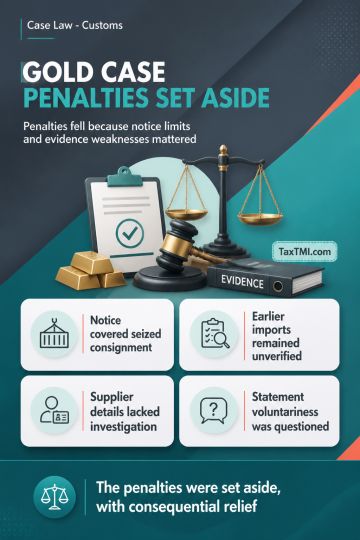
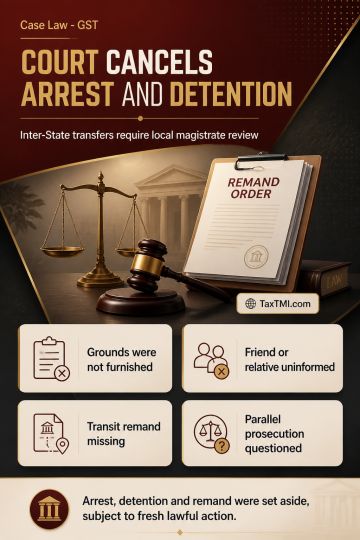
Arrest safeguards and transit remand requirements invalidated detention following inter-State transfer without communicated grounds or magistrate auth...
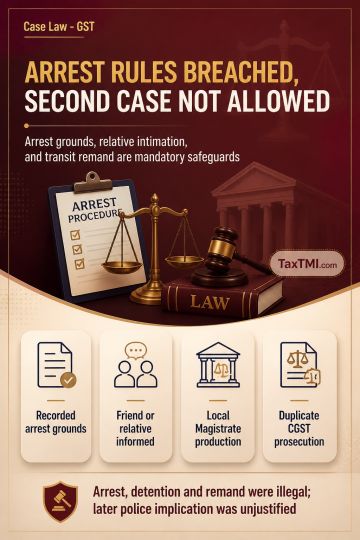
Arrest safeguards require disclosed grounds, relative intimation and transit remand, while duplicate prosecution under the CGST framework is unsustain...
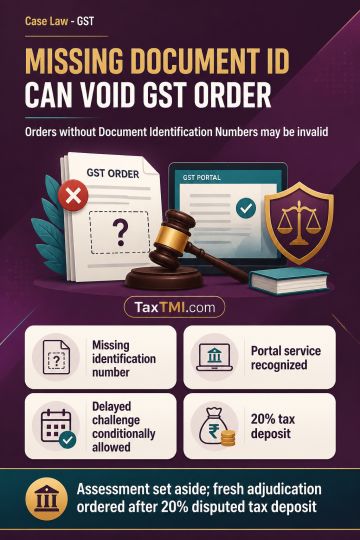
Document Identification Number defects can invalidate GST assessments, with delayed challenges entertained conditionally where patent irregularities e...
Windmill commissioning evidence supported higher depreciation where grid connection and electricity generation proved operational use before the relev...
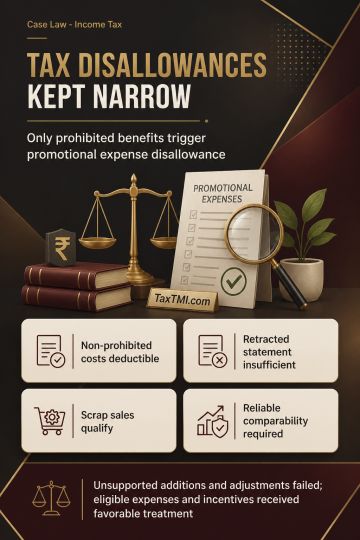
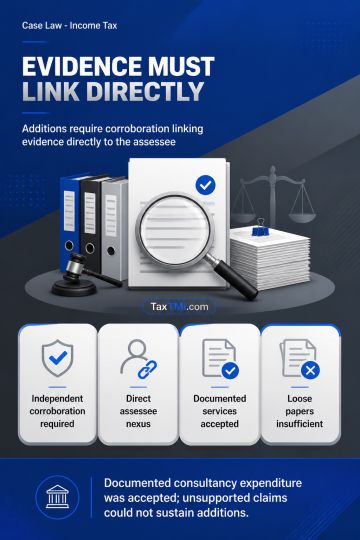
Pharmaceutical promotion and transfer-pricing comparability principles limited disallowances, while uncorroborated search allegations and unsupported ...
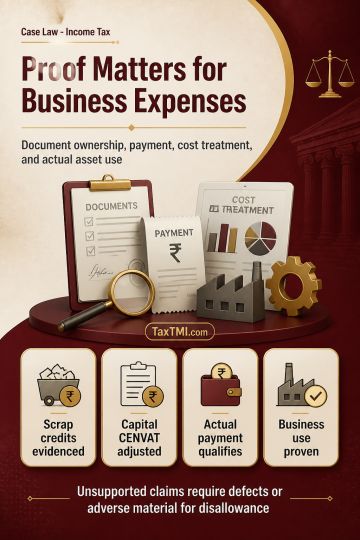
Business expenditure substantiation supports scrap credits, statutory payments and expense claims, while depreciation requires proof of actual busines...
In the case of 2024 (5) TMI 1132 before the ITAT Mumbai, the issue pertained to penalty proceedings u/s. 271(1)(c) concerning the estimation of income on bogus purchases. The CIT(A) applied a gross profit rate of 10% on the bogus purchases instead of the entire amount added by the assessing officer, leading to the deletion of the penalty. The tribunal held that since the payments for the purchases were evidenced in the books and through banking channels, with corresponding utilization in the manufacturing account accepted, the entire purchases could not have been added u/s. 69C. The decision was in line with precedents such as PCIT vs. Jagdish Thakkar and PCIT vs. S V Jiwani. Consequently, the appeal of the Revenue was dismissed as there was no concealment of income based on the estimated profit rate of 10%. The penalty was rightly deleted by the CIT(A), as there was no furnishing of inaccurate particulars or concealment of income.
In the case of 2024 (5) TMI 1132 before the ITAT Mumbai, the issue pertained to penalty proceedings u/s. 271(1)(c) concerning the estimation of income on bogus purchases. The CIT(A) applied a gross profit rate of 10% on the bogus purchases instead of the entire amount added by the assessing officer, leading to the deletion of the penalty. The tribunal held that since the payments for the purchases were evidenced in the books and through banking channels, with corresponding utilization in the manufacturing account accepted, the entire purchases could not have been added u/s. 69C. The decision was in line with precedents such as PCIT vs. Jagdish Thakkar and PCIT vs. S V Jiwani. Consequently, the appeal of the Revenue was dismissed as there was no concealment of income based on the estimated profit rate of 10%. The penalty was rightly deleted by the CIT(A), as there was no furnishing of inaccurate particulars or concealment of income.
Note: It is a system-generated summary and is for quick reference only.
 TaxTMI
 of 4792







 Join Channel


 TaxTMI