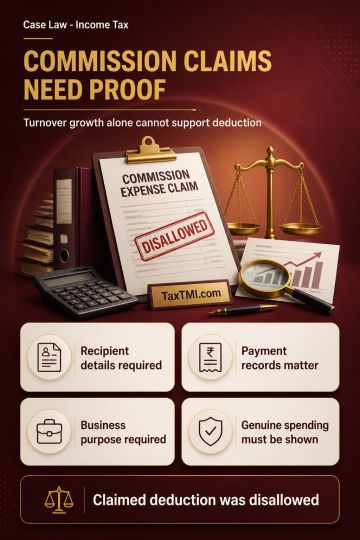
Business expenditure deduction requires proof of genuine commission payments and commercial allowability; turnover growth alone cannot validate the cl...
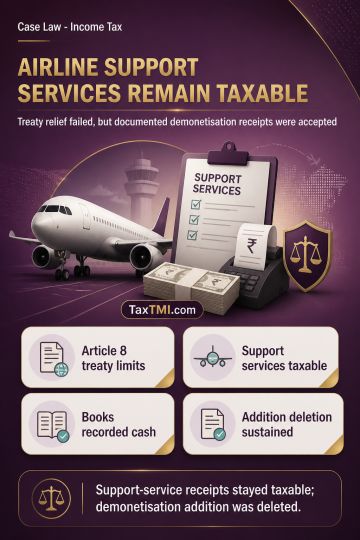
Article 8 treaty coverage excluded third-party airline support services, while documented demonetisation cash receipts remained accepted business inco...
Functional comparability under TNMM requires highway contract benchmarks to reflect operation, maintenance and transfer activities, requiring fresh be...
The ITAT Delhi held that the merger of intimation/proceedings u/s 143(1) with regular assessment u/s 143(3) results in the intimation losing relevance once regular assessment is completed. The AO denied exemption u/s 11 due to non-filing of Form 10B, but the intimation u/s 143(1) only serves to verify information accuracy and does not carry the legitimacy of an assessment. The intimation merges with the regular assessment under u/s 143(3), making the appeal against the intimation infructuous. The eligibility for exemption u/s 11 post registration u/s 12A should be raised in the appeal against the regular assessment. The appeal was partly allowed in favor of the assessee, determining the demand raised in the 143(1) intimation as not sustainable.
The ITAT Delhi held that the merger of intimation/proceedings u/s 143(1) with regular assessment u/s 143(3) results in the intimation losing relevance once regular assessment is completed. The AO denied exemption u/s 11 due to non-filing of Form 10B, but the intimation u/s 143(1) only serves to verify information accuracy and does not carry the legitimacy of an assessment. The intimation merges with the regular assessment under u/s 143(3), making the appeal against the intimation infructuous. The eligibility for exemption u/s 11 post registration u/s 12A should be raised in the appeal against the regular assessment. The appeal was partly allowed in favor of the assessee, determining the demand raised in the 143(1) intimation as not sustainable.
Note: It is a system-generated summary and is for quick reference only.
 TaxTMI
 of 4792






 Join Channel


 TaxTMI
