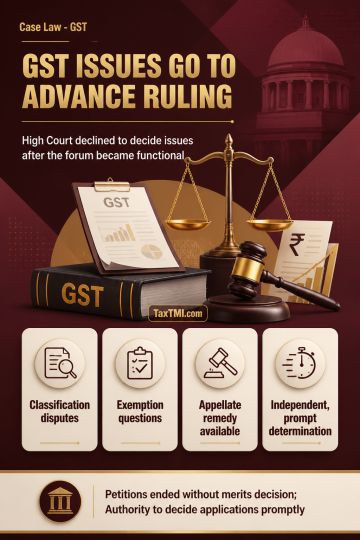
Advance-ruling mechanism governs pending GST classification, exemption and taxability disputes, limiting writ review once the specialised forum functi...
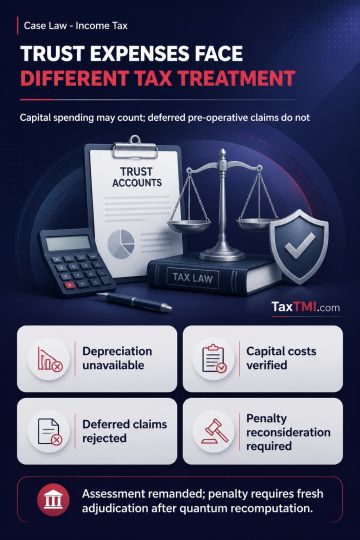
Charitable trust income application permits verified capital expenditure but rejects deferred pre-operative claims and requires reconsideration of con...
Reinsurance premium deductions require established regulatory breaches, while independently acquired software qualifies within the computer depreciati...
The ITAT Delhi addressed an addition u/s 41(1) converted from u/s 68, focusing on whether there was actual receipt of money or just journal entries for account adjustments. The AR argued that the entries were for loan adjustments from a prior year. The tribunal found the CIT(A)'s conclusion erroneous as there was no actual receipt of money, only journal entries reflecting borrowed funds and liabilities transferred to M/s Vrinda Developers Pvt. Ltd. The tribunal held that the journal entry did not constitute unexplained cash credit u/s 68, as it was a book entry transfer without a real cash credit. Citing a similar case, the tribunal emphasized the need for actual flow of funds to trigger the explanation requirement. Additionally, the tribunal allowed the expenditure related to a project started in the relevant year, despite the invoice being raised in the previous year. The decision favored the assessee based on project-related expenditure evidence.
The ITAT Delhi addressed an addition u/s 41(1) converted from u/s 68, focusing on whether there was actual receipt of money or just journal entries for account adjustments. The AR argued that the entries were for loan adjustments from a prior year. The tribunal found the CIT(A)'s conclusion erroneous as there was no actual receipt of money, only journal entries reflecting borrowed funds and liabilities transferred to M/s Vrinda Developers Pvt. Ltd. The tribunal held that the journal entry did not constitute unexplained cash credit u/s 68, as it was a book entry transfer without a real cash credit. Citing a similar case, the tribunal emphasized the need for actual flow of funds to trigger the explanation requirement. Additionally, the tribunal allowed the expenditure related to a project started in the relevant year, despite the invoice being raised in the previous year. The decision favored the assessee based on project-related expenditure evidence.
Note: It is a system-generated summary and is for quick reference only.
 TaxTMI
 of 4792

















 Join Channel


 TaxTMI