Transfer pricing and tax deductions upheld on established principles, while employee contributions and warranty provisions returned for fresh examinat...
Captive transfer pricing relies on industrial consumer tariffs, while genuine quotations can benchmark effluent treatment transfers under the Other Me...
Specific tariff classification for ophthalmic instruments and extended limitation principles determine the treatment of duty demands, confiscation, an...
Integrated golf function determines classification, placing launch monitors and simulators under other golf equipment rather than measuring instrument...
Public servant status under anti-corruption law extends to recognised stock exchange leadership; constitutional and sanction challenges do not succeed...
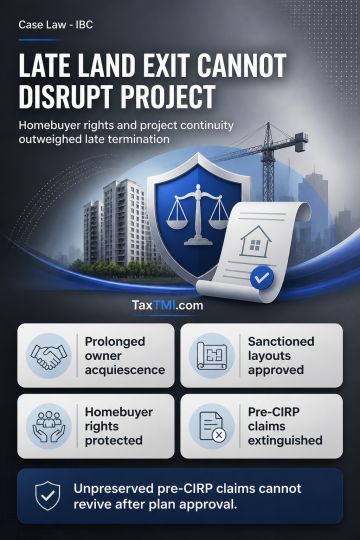
Acquiescence, homebuyer protection and clean-slate resolution principles prevent landowners from disrupting an integrated project through late termina...
The National Company Law Appellate Tribunal, Principal Bench, New Delhi, addressed the validity of the Corporate Insolvency Resolution Process (CIRP) against a struck-off company. The Tribunal found that the company's revival status in the Master Data of the Corporate Debtor and non-compliance with the Companies Act did not absolve it of financial liabilities. Late claims post-approval of the Resolution Plan were not accepted, as confirmed by the Tribunal. The impact of settlement agreements on the Corporate Debtor's liability was also discussed, with the Tribunal emphasizing the continued obligation of the Corporate Debtor to discharge its financial debt despite claims to the contrary. The Tribunal dismissed the appeal, upholding the order approving the Resolution Plan.
The National Company Law Appellate Tribunal, Principal Bench, New Delhi, addressed the validity of the Corporate Insolvency Resolution Process (CIRP) against a struck-off company. The Tribunal found that the company's revival status in the Master Data of the Corporate Debtor and non-compliance with the Companies Act did not absolve it of financial liabilities. Late claims post-approval of the Resolution Plan were not accepted, as confirmed by the Tribunal. The impact of settlement agreements on the Corporate Debtor's liability was also discussed, with the Tribunal emphasizing the continued obligation of the Corporate Debtor to discharge its financial debt despite claims to the contrary. The Tribunal dismissed the appeal, upholding the order approving the Resolution Plan.
Note: It is a system-generated summary and is for quick reference only.
 TaxTMI
 of 4803












 Join Channel


 TaxTMI