Inherited property sale proceeds require capital-gains treatment where ownership is supported by evidence, not suspicion or unverified signature doubt...
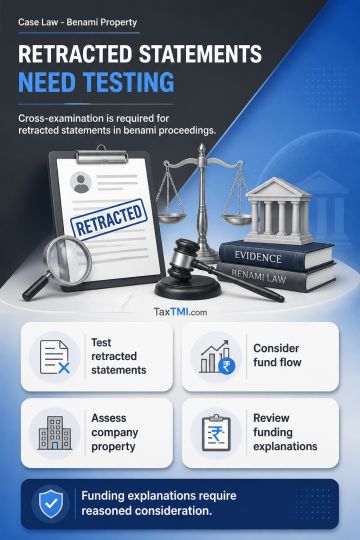
Cross-examination of retracted statements is essential where foundational evidence supports a benami allegation and documented funding explanations re...
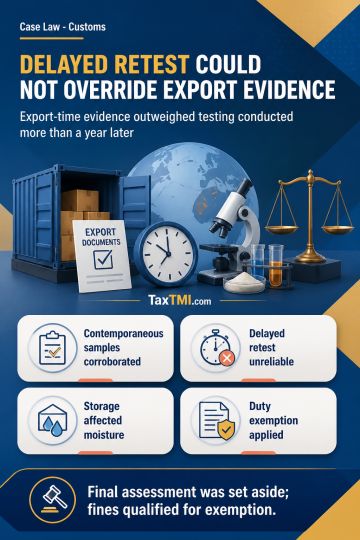
Capital-goods exemption covers plant-modernisation accessories, while the import restriction applies only to earlier capital-goods components and spar...
Constitutional judicial review permits challenges to ECIRs and connected money-laundering proceedings where coercive action affects fundamental intere...
The ITAT Hyderabad addressed the issue of determining the correct head of income for gains on the sale of property, whether it should be classified as business income or capital gains based on the intention of the assessee. The tribunal emphasized the importance of consistency in applying decisions across connected assessees with similar Joint Development Agreements (JDA). The tribunal held that if a co-ordinate Bench had previously ruled in favor of an assessee with rights from the same JDA, the principle should be applied uniformly unless there is a change in law or facts. The Revenue's inconsistent treatment of assessees in similar situations was deemed unacceptable, as it goes against the principle of certainty and fairness in tax law. The tribunal also upheld the CIT(A)'s decision to treat the income as long-term capital gains, in line with the co-ordinate Bench's reasoning and circulars issued by the Revenue.
The ITAT Hyderabad addressed the issue of determining the correct head of income for gains on the sale of property, whether it should be classified as business income or capital gains based on the intention of the assessee. The tribunal emphasized the importance of consistency in applying decisions across connected assessees with similar Joint Development Agreements (JDA). The tribunal held that if a co-ordinate Bench had previously ruled in favor of an assessee with rights from the same JDA, the principle should be applied uniformly unless there is a change in law or facts. The Revenue's inconsistent treatment of assessees in similar situations was deemed unacceptable, as it goes against the principle of certainty and fairness in tax law. The tribunal also upheld the CIT(A)'s decision to treat the income as long-term capital gains, in line with the co-ordinate Bench's reasoning and circulars issued by the Revenue.
Note: It is a system-generated summary and is for quick reference only.
 TaxTMI
 of 4786




















 Join Channel


 TaxTMI