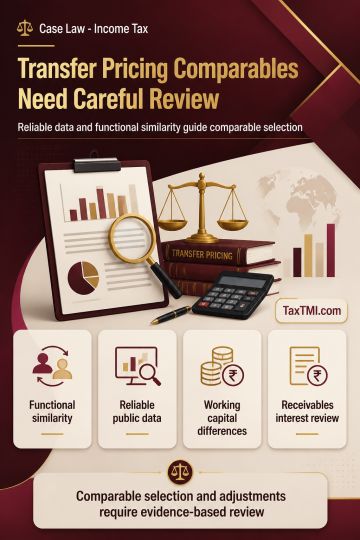
Transfer pricing comparability requires functional alignment, reliable financial data, and careful review of working capital and receivables adjustmen...
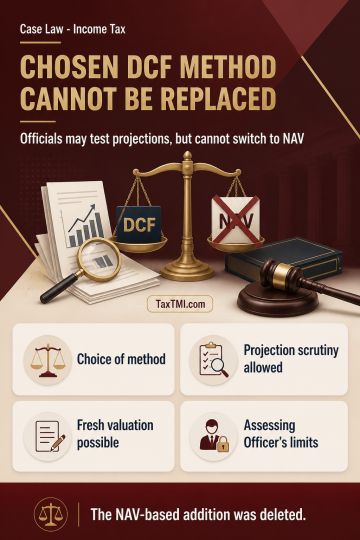
Transfer pricing rules require benchmarking corporate guarantees and associated-enterprise advances, while invalid domestic-transaction adjustments ca...
Prospective sugar export prohibition required registered letters of credit; private contracts and export quotas created no enforceable continuation ri...
Retroactive interim-moratorium exclusion permits protective asset disclosure and preservation measures against personal guarantors pending arbitration...
The ITAT Hyderabad addressed the issue of determining the correct head of income for gains on the sale of property, whether it should be classified as business income or capital gains based on the intention of the assessee. The tribunal emphasized the importance of consistency in applying decisions across connected assessees with similar Joint Development Agreements (JDA). The tribunal held that if a co-ordinate Bench had previously ruled in favor of an assessee with rights from the same JDA, the principle should be applied uniformly unless there is a change in law or facts. The Revenue's inconsistent treatment of assessees in similar situations was deemed unacceptable, as it goes against the principle of certainty and fairness in tax law. The tribunal also upheld the CIT(A)'s decision to treat the income as long-term capital gains, in line with the co-ordinate Bench's reasoning and circulars issued by the Revenue.
The ITAT Hyderabad addressed the issue of determining the correct head of income for gains on the sale of property, whether it should be classified as business income or capital gains based on the intention of the assessee. The tribunal emphasized the importance of consistency in applying decisions across connected assessees with similar Joint Development Agreements (JDA). The tribunal held that if a co-ordinate Bench had previously ruled in favor of an assessee with rights from the same JDA, the principle should be applied uniformly unless there is a change in law or facts. The Revenue's inconsistent treatment of assessees in similar situations was deemed unacceptable, as it goes against the principle of certainty and fairness in tax law. The tribunal also upheld the CIT(A)'s decision to treat the income as long-term capital gains, in line with the co-ordinate Bench's reasoning and circulars issued by the Revenue.
Note: It is a system-generated summary and is for quick reference only.
 TaxTMI
 of 4788



















 Join Channel


 TaxTMI