Fair-rent assessment requires consideration of lease terms, valuation principles and prevailing market rent; the certificate was quashed for fresh rev...
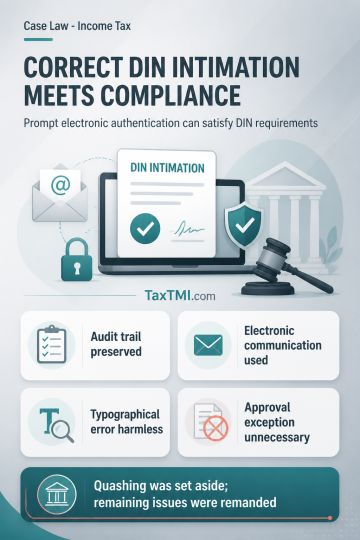
Document Identification Number compliance is satisfied when electronically communicated orders are promptly authenticated through a correctly identifi...
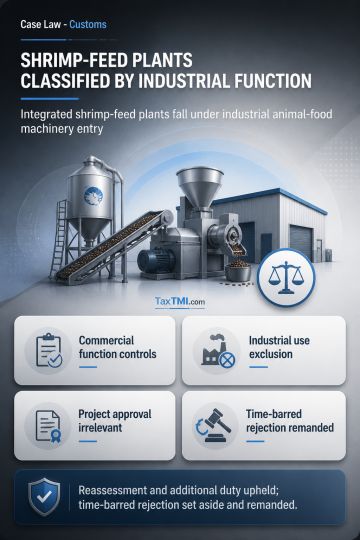
Industrial shrimp-feed machinery classification follows its commercial function, placing integrated production plants under the specific industrial fo...
The case before CESTAT Chennai involved the recovery of short-paid excise duty, interest, and penalty, focusing on the admissibility of electronic evidence obtained during previous proceedings for a different company. The key issues included compliance with Section 36B of the Central Excise Act, 1944, quantification of demand based on cash to invoice value, and alleged suppression of facts. The tribunal found that the electronic evidence did not comply with Section 36B, rendering it inadmissible. Additionally, the method of quantifying duty based on dealer prices from different regions was deemed inappropriate. Ultimately, the demand for duty, interest, and penalties was not sustained, and the appeal was allowed.
The case before CESTAT Chennai involved the recovery of short-paid excise duty, interest, and penalty, focusing on the admissibility of electronic evidence obtained during previous proceedings for a different company. The key issues included compliance with Section 36B of the Central Excise Act, 1944, quantification of demand based on cash to invoice value, and alleged suppression of facts. The tribunal found that the electronic evidence did not comply with Section 36B, rendering it inadmissible. Additionally, the method of quantifying duty based on dealer prices from different regions was deemed inappropriate. Ultimately, the demand for duty, interest, and penalties was not sustained, and the appeal was allowed.
Note: It is a system-generated summary and is for quick reference only.
 TaxTMI
 of 4800







 Join Channel


 TaxTMI
