Opportunity to respond to jurisdictional reports is mandatory before customs settlement duty enhancement; connected applications require consistent ad...
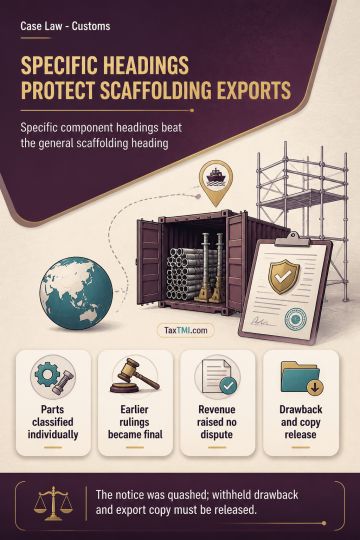
Specific customs headings for scaffolding components prevail over general classification, invalidating misclassification proceedings and enabling with...
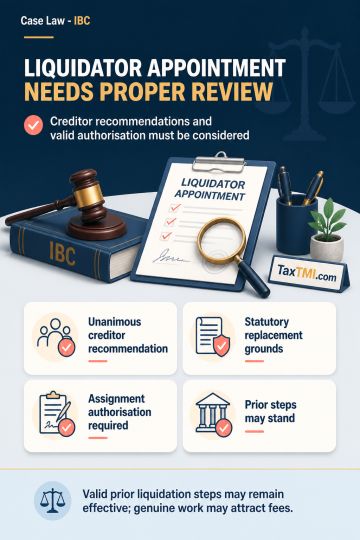
Liquidator appointment under Section 34 requires consideration of creditor recommendations, valid professional authorisation, and preservation of vali...
The case before CESTAT Chennai involved the recovery of short-paid excise duty, interest, and penalty, focusing on the admissibility of electronic evidence obtained during previous proceedings for a different company. The key issues included compliance with Section 36B of the Central Excise Act, 1944, quantification of demand based on cash to invoice value, and alleged suppression of facts. The tribunal found that the electronic evidence did not comply with Section 36B, rendering it inadmissible. Additionally, the method of quantifying duty based on dealer prices from different regions was deemed inappropriate. Ultimately, the demand for duty, interest, and penalties was not sustained, and the appeal was allowed.
The case before CESTAT Chennai involved the recovery of short-paid excise duty, interest, and penalty, focusing on the admissibility of electronic evidence obtained during previous proceedings for a different company. The key issues included compliance with Section 36B of the Central Excise Act, 1944, quantification of demand based on cash to invoice value, and alleged suppression of facts. The tribunal found that the electronic evidence did not comply with Section 36B, rendering it inadmissible. Additionally, the method of quantifying duty based on dealer prices from different regions was deemed inappropriate. Ultimately, the demand for duty, interest, and penalties was not sustained, and the appeal was allowed.
Note: It is a system-generated summary and is for quick reference only.
 TaxTMI
 of 4788








 Join Channel


 TaxTMI
