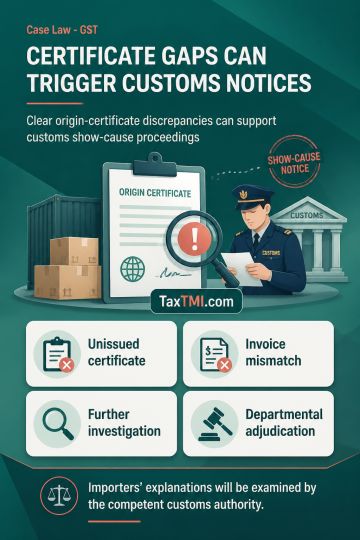
Jurisdictional facts in certificate-of-origin discrepancies can support customs show-cause proceedings, leaving factual explanations for departmental ...
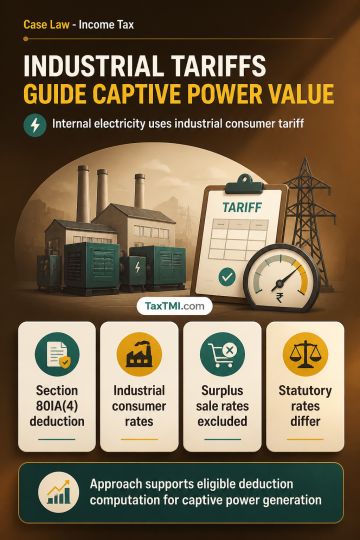
Market value for captive electricity consumption follows industrial consumer tariffs, supporting profit computation for the power generation deduction...
The Calcutta High Court ruled on a case involving dishonour of a cheque due to insufficient funds. The accused was acquitted as the complainant failed to prove money lending authority and rebut the presumption u/s 139 of the Negotiable Instruments Act. The court held that the demand notice and presumption favored the complainant. The magistrate's findings were deemed contrary to the law. Referring to a Supreme Court case, it was stated that even a blank signed cheque leaf implies a debt under u/s 139. The accused was convicted u/s 138 and directed to pay a fine of Rs. 8 lakhs within two months or face imprisonment. The application was disposed of accordingly.
The Calcutta High Court ruled on a case involving dishonour of a cheque due to insufficient funds. The accused was acquitted as the complainant failed to prove money lending authority and rebut the presumption u/s 139 of the Negotiable Instruments Act. The court held that the demand notice and presumption favored the complainant. The magistrate's findings were deemed contrary to the law. Referring to a Supreme Court case, it was stated that even a blank signed cheque leaf implies a debt under u/s 139. The accused was convicted u/s 138 and directed to pay a fine of Rs. 8 lakhs within two months or face imprisonment. The application was disposed of accordingly.
Note: It is a system-generated summary and is for quick reference only.
 TaxTMI
 of 4785




 Join Channel


 TaxTMI
