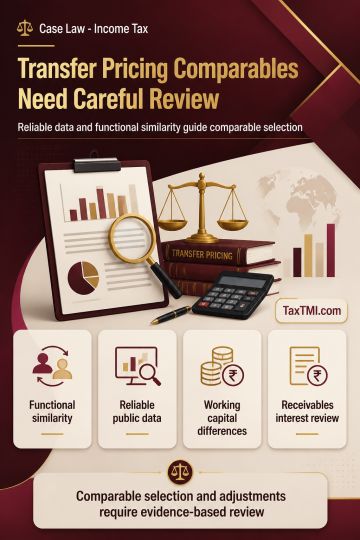
Transfer pricing comparability requires functional alignment, reliable financial data, and careful review of working capital and receivables adjustmen...
Transfer pricing rules require benchmarking corporate guarantees and associated-enterprise advances, while invalid domestic-transaction adjustments ca...
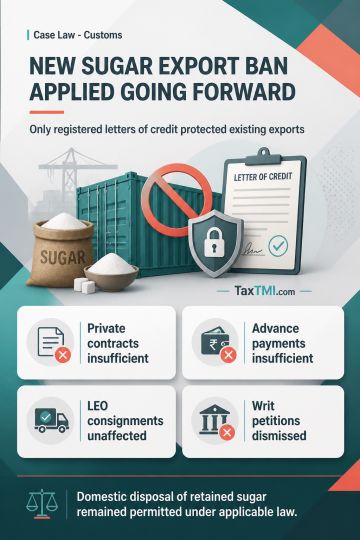
Prospective sugar export prohibition required registered letters of credit; private contracts and export quotas created no enforceable continuation ri...
Retroactive interim-moratorium exclusion permits protective asset disclosure and preservation measures against personal guarantors pending arbitration...
The Supreme Court of India examined the legality of the arrest of the petitioner under the Prevention of Money Laundering Act (PMLA) and the Unlawful Activities (Prevention) Act (UAPA). The Court found no significant difference between the provisions of Section 19 of the PMLA and Section 43B of the UAPA regarding the communication of grounds for arrest. Both provisions stem from the constitutional safeguard under Article 22(1) of the Indian Constitution. The Court emphasized the fundamental right of an arrested person to be informed in writing of the grounds for arrest promptly. Failure to provide written grounds of arrest before remand vitiates the arrest and subsequent proceedings. The Court held that the arrest and remand orders were invalid, quashed them, and directed the release of the appellant. The judgment sets a binding precedent for all courts in the country.
The Supreme Court of India examined the legality of the arrest of the petitioner under the Prevention of Money Laundering Act (PMLA) and the Unlawful Activities (Prevention) Act (UAPA). The Court found no significant difference between the provisions of Section 19 of the PMLA and Section 43B of the UAPA regarding the communication of grounds for arrest. Both provisions stem from the constitutional safeguard under Article 22(1) of the Indian Constitution. The Court emphasized the fundamental right of an arrested person to be informed in writing of the grounds for arrest promptly. Failure to provide written grounds of arrest before remand vitiates the arrest and subsequent proceedings. The Court held that the arrest and remand orders were invalid, quashed them, and directed the release of the appellant. The judgment sets a binding precedent for all courts in the country.
Note: It is a system-generated summary and is for quick reference only.
 TaxTMI
 of 4780

















 Join Channel


 TaxTMI