Specialized Investment Fund distribution now requires dedicated certification, while transitional recognition preserves existing qualified distributor...
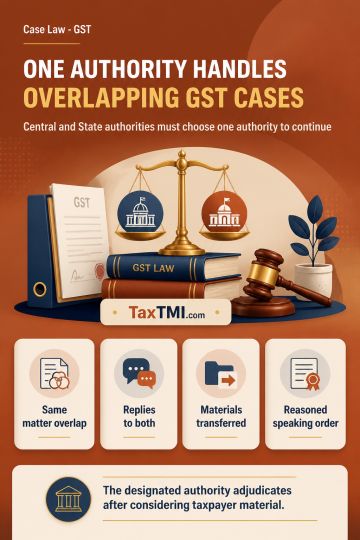
Overlapping GST proceedings require Central and State authorities to designate one competent authority for coordinated adjudication of the same matter...
Composite healthcare supplies retain exemption when patient care is the contract's essential character, despite payment through an implementing agency...
Receipt of immovable property requires actual possession or enjoyment; redevelopment allotments exchanged for tenancy rights fall outside deemed incom...
The Supreme Court of India examined the legality of the arrest of the petitioner under the Prevention of Money Laundering Act (PMLA) and the Unlawful Activities (Prevention) Act (UAPA). The Court found no significant difference between the provisions of Section 19 of the PMLA and Section 43B of the UAPA regarding the communication of grounds for arrest. Both provisions stem from the constitutional safeguard under Article 22(1) of the Indian Constitution. The Court emphasized the fundamental right of an arrested person to be informed in writing of the grounds for arrest promptly. Failure to provide written grounds of arrest before remand vitiates the arrest and subsequent proceedings. The Court held that the arrest and remand orders were invalid, quashed them, and directed the release of the appellant. The judgment sets a binding precedent for all courts in the country.
The Supreme Court of India examined the legality of the arrest of the petitioner under the Prevention of Money Laundering Act (PMLA) and the Unlawful Activities (Prevention) Act (UAPA). The Court found no significant difference between the provisions of Section 19 of the PMLA and Section 43B of the UAPA regarding the communication of grounds for arrest. Both provisions stem from the constitutional safeguard under Article 22(1) of the Indian Constitution. The Court emphasized the fundamental right of an arrested person to be informed in writing of the grounds for arrest promptly. Failure to provide written grounds of arrest before remand vitiates the arrest and subsequent proceedings. The Court held that the arrest and remand orders were invalid, quashed them, and directed the release of the appellant. The judgment sets a binding precedent for all courts in the country.
Note: It is a system-generated summary and is for quick reference only.
 TaxTMI
 of 4786

















 Join Channel


 TaxTMI
