Cooperative society deposits, member-interest TDS exemption and credit-facility deduction claims require verification through records and supporting e...
Customs jurisdiction over EPCG condition breaches survives export-obligation discharge certificates, requiring alleged fraud and misdeclaration to be ...
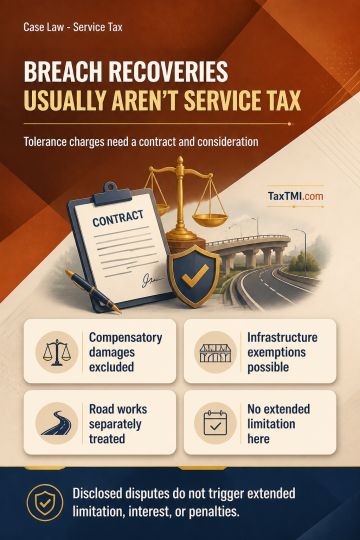
Contractual tolerance requires consideration; breach recoveries, qualifying public infrastructure services and road works escape service tax liability...
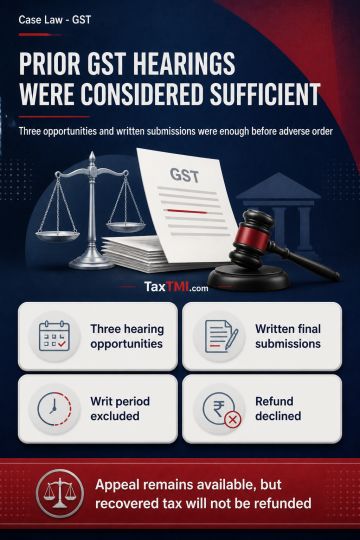
Personal hearing requirements in GST adjudication were satisfied by prior opportunities and written submissions; appellate limitation received writ-pe...
The Supreme Court of India examined the legality of the arrest of the petitioner under the Prevention of Money Laundering Act (PMLA) and the Unlawful Activities (Prevention) Act (UAPA). The Court found no significant difference between the provisions of Section 19 of the PMLA and Section 43B of the UAPA regarding the communication of grounds for arrest. Both provisions stem from the constitutional safeguard under Article 22(1) of the Indian Constitution. The Court emphasized the fundamental right of an arrested person to be informed in writing of the grounds for arrest promptly. Failure to provide written grounds of arrest before remand vitiates the arrest and subsequent proceedings. The Court held that the arrest and remand orders were invalid, quashed them, and directed the release of the appellant. The judgment sets a binding precedent for all courts in the country.
The Supreme Court of India examined the legality of the arrest of the petitioner under the Prevention of Money Laundering Act (PMLA) and the Unlawful Activities (Prevention) Act (UAPA). The Court found no significant difference between the provisions of Section 19 of the PMLA and Section 43B of the UAPA regarding the communication of grounds for arrest. Both provisions stem from the constitutional safeguard under Article 22(1) of the Indian Constitution. The Court emphasized the fundamental right of an arrested person to be informed in writing of the grounds for arrest promptly. Failure to provide written grounds of arrest before remand vitiates the arrest and subsequent proceedings. The Court held that the arrest and remand orders were invalid, quashed them, and directed the release of the appellant. The judgment sets a binding precedent for all courts in the country.
Note: It is a system-generated summary and is for quick reference only.
 TaxTMI
 of 4784


















 Join Channel


 TaxTMI