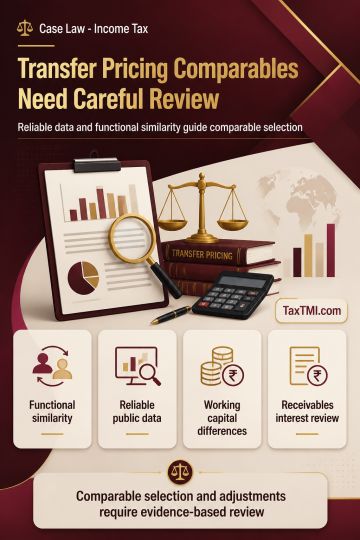
Transfer pricing comparability requires functional alignment, reliable financial data, and careful review of working capital and receivables adjustmen...
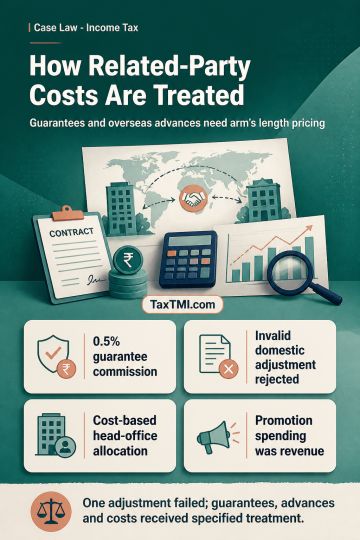
Transfer pricing rules require benchmarking corporate guarantees and associated-enterprise advances, while invalid domestic-transaction adjustments ca...
Prospective sugar export prohibition required registered letters of credit; private contracts and export quotas created no enforceable continuation ri...
Retroactive interim-moratorium exclusion permits protective asset disclosure and preservation measures against personal guarantors pending arbitration...
The ITAT Mumbai addressed two key issues in the case. Firstly, regarding the penalty u/s 271(1)(c), the tribunal held that the absence of a tick mark on the notice did not prejudice the assessee as they were fully aware of the reasons for penalty initiation. The tribunal emphasized that the assessee actively participated in the proceedings and responded to the notice adequately. Citing the Veena Textiles case, the tribunal dismissed the argument that the defective notice provided grounds for relief.Secondly, concerning the penalty imposed on the estimation of income from bogus purchases, the tribunal ruled in favor of the assessee. It highlighted that when additions are based on estimates, as in this case where a percentage of bogus purchases was added, penalty u/s 271(1)(c) is not sustainable. The tribunal noted that since the purchases were paid through legitimate channels and there were corresponding sales, applying an ad hoc GP rate on alleged bogus purchases does not warrant a p
The ITAT Mumbai addressed two key issues in the case. Firstly, regarding the penalty u/s 271(1)(c), the tribunal held that the absence of a tick mark on the notice did not prejudice the assessee as they were fully aware of the reasons for penalty initiation. The tribunal emphasized that the assessee actively participated in the proceedings and responded to the notice adequately. Citing the Veena Textiles case, the tribunal dismissed the argument that the defective notice provided grounds for relief.Secondly, concerning the penalty imposed on the estimation of income from bogus purchases, the tribunal ruled in favor of the assessee. It highlighted that when additions are based on estimates, as in this case where a percentage of bogus purchases was added, penalty u/s 271(1)(c) is not sustainable. The tribunal noted that since the purchases were paid through legitimate channels and there were corresponding sales, applying an ad hoc GP rate on alleged bogus purchases does not warrant a p
Note: It is a system-generated summary and is for quick reference only.
 TaxTMI
 of 4782















 Join Channel


 TaxTMI