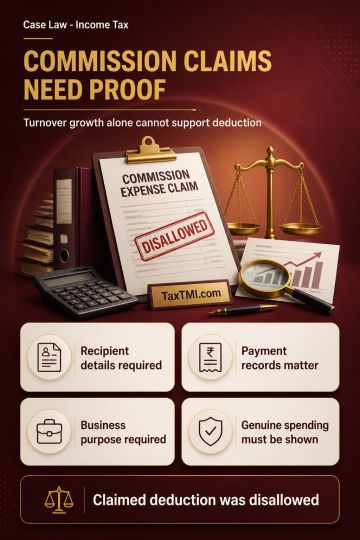
Business expenditure deduction requires proof of genuine commission payments and commercial allowability; turnover growth alone cannot validate the cl...
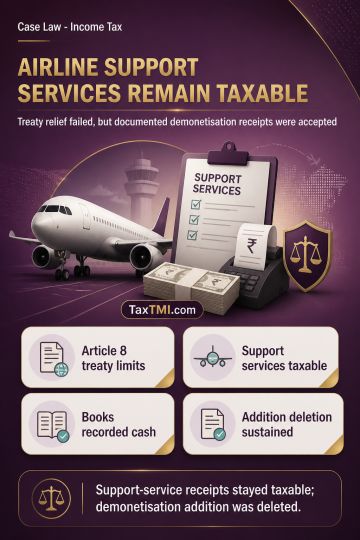
Article 8 treaty coverage excluded third-party airline support services, while documented demonetisation cash receipts remained accepted business inco...
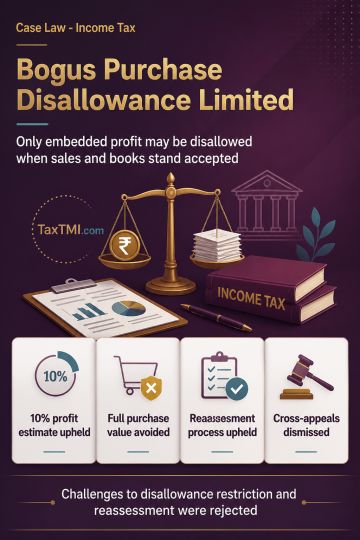
The ITAT Mumbai addressed two key issues in the case. Firstly, regarding the penalty u/s 271(1)(c), the tribunal held that the absence of a tick mark on the notice did not prejudice the assessee as they were fully aware of the reasons for penalty initiation. The tribunal emphasized that the assessee actively participated in the proceedings and responded to the notice adequately. Citing the Veena Textiles case, the tribunal dismissed the argument that the defective notice provided grounds for relief.Secondly, concerning the penalty imposed on the estimation of income from bogus purchases, the tribunal ruled in favor of the assessee. It highlighted that when additions are based on estimates, as in this case where a percentage of bogus purchases was added, penalty u/s 271(1)(c) is not sustainable. The tribunal noted that since the purchases were paid through legitimate channels and there were corresponding sales, applying an ad hoc GP rate on alleged bogus purchases does not warrant a p
The ITAT Mumbai addressed two key issues in the case. Firstly, regarding the penalty u/s 271(1)(c), the tribunal held that the absence of a tick mark on the notice did not prejudice the assessee as they were fully aware of the reasons for penalty initiation. The tribunal emphasized that the assessee actively participated in the proceedings and responded to the notice adequately. Citing the Veena Textiles case, the tribunal dismissed the argument that the defective notice provided grounds for relief.Secondly, concerning the penalty imposed on the estimation of income from bogus purchases, the tribunal ruled in favor of the assessee. It highlighted that when additions are based on estimates, as in this case where a percentage of bogus purchases was added, penalty u/s 271(1)(c) is not sustainable. The tribunal noted that since the purchases were paid through legitimate channels and there were corresponding sales, applying an ad hoc GP rate on alleged bogus purchases does not warrant a p
Note: It is a system-generated summary and is for quick reference only.
 TaxTMI
 of 4780








 Join Channel


 TaxTMI