Section 80P deduction covers Souharda credit societies, including qualifying surplus-deposit interest, subject to member KYC verification for cash dep...
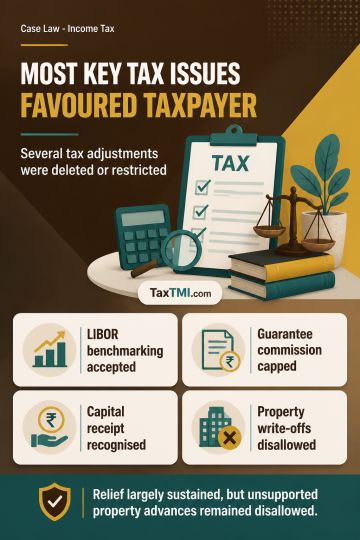
Transfer-pricing benchmarking and capital-receipt principles sustained taxpayer relief, while unsupported property-advance write-offs remained disallo...
Pre-existing operational debt disputes require genuine evidence, while undirected running-account payments may be appropriated on a first-in-first-out...
Agency in CNG distribution makes outlet operators commission agents, rendering taxable Business Auxiliary Service rather than purchasing goods for res...
The ITAT Mumbai addressed two key issues in the case. Firstly, regarding the penalty u/s 271(1)(c), the tribunal held that the absence of a tick mark on the notice did not prejudice the assessee as they were fully aware of the reasons for penalty initiation. The tribunal emphasized that the assessee actively participated in the proceedings and responded to the notice adequately. Citing the Veena Textiles case, the tribunal dismissed the argument that the defective notice provided grounds for relief.Secondly, concerning the penalty imposed on the estimation of income from bogus purchases, the tribunal ruled in favor of the assessee. It highlighted that when additions are based on estimates, as in this case where a percentage of bogus purchases was added, penalty u/s 271(1)(c) is not sustainable. The tribunal noted that since the purchases were paid through legitimate channels and there were corresponding sales, applying an ad hoc GP rate on alleged bogus purchases does not warrant a p
The ITAT Mumbai addressed two key issues in the case. Firstly, regarding the penalty u/s 271(1)(c), the tribunal held that the absence of a tick mark on the notice did not prejudice the assessee as they were fully aware of the reasons for penalty initiation. The tribunal emphasized that the assessee actively participated in the proceedings and responded to the notice adequately. Citing the Veena Textiles case, the tribunal dismissed the argument that the defective notice provided grounds for relief.Secondly, concerning the penalty imposed on the estimation of income from bogus purchases, the tribunal ruled in favor of the assessee. It highlighted that when additions are based on estimates, as in this case where a percentage of bogus purchases was added, penalty u/s 271(1)(c) is not sustainable. The tribunal noted that since the purchases were paid through legitimate channels and there were corresponding sales, applying an ad hoc GP rate on alleged bogus purchases does not warrant a p
Note: It is a system-generated summary and is for quick reference only.
 TaxTMI
 of 4792


















 Join Channel


 TaxTMI
