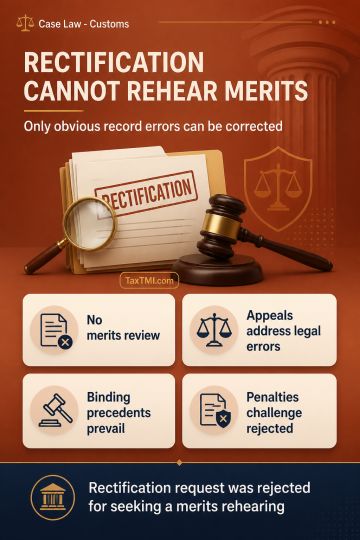
Rectification of mistake remains limited to self-evident record errors, preventing merits review through miscellaneous applications and preserving fin...
Tender creditworthiness conditions may extend to de facto Promoter Directors, with post-participation challenges generally barred absent arbitrariness...
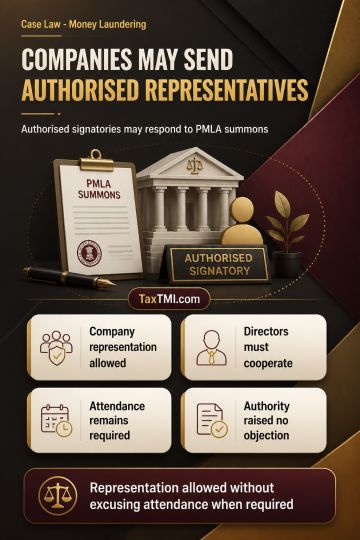
Corporate representation in PMLA summons proceedings permitted through an authorised signatory, subject to directors' continuing cooperation and atten...
Helicopter charter classification requires effective control analysis, while territorial performance, reasoned credit orders and wilful suppression de...
Specified fund definition expands PAN exemption eligibility for registered alternative investment funds and qualifying International Financial Service...
The ITAT Mumbai addressed two key issues in the case. Firstly, regarding the penalty u/s 271(1)(c), the tribunal held that the absence of a tick mark on the notice did not prejudice the assessee as they were fully aware of the reasons for penalty initiation. The tribunal emphasized that the assessee actively participated in the proceedings and responded to the notice adequately. Citing the Veena Textiles case, the tribunal dismissed the argument that the defective notice provided grounds for relief.Secondly, concerning the penalty imposed on the estimation of income from bogus purchases, the tribunal ruled in favor of the assessee. It highlighted that when additions are based on estimates, as in this case where a percentage of bogus purchases was added, penalty u/s 271(1)(c) is not sustainable. The tribunal noted that since the purchases were paid through legitimate channels and there were corresponding sales, applying an ad hoc GP rate on alleged bogus purchases does not warrant a p
The ITAT Mumbai addressed two key issues in the case. Firstly, regarding the penalty u/s 271(1)(c), the tribunal held that the absence of a tick mark on the notice did not prejudice the assessee as they were fully aware of the reasons for penalty initiation. The tribunal emphasized that the assessee actively participated in the proceedings and responded to the notice adequately. Citing the Veena Textiles case, the tribunal dismissed the argument that the defective notice provided grounds for relief.Secondly, concerning the penalty imposed on the estimation of income from bogus purchases, the tribunal ruled in favor of the assessee. It highlighted that when additions are based on estimates, as in this case where a percentage of bogus purchases was added, penalty u/s 271(1)(c) is not sustainable. The tribunal noted that since the purchases were paid through legitimate channels and there were corresponding sales, applying an ad hoc GP rate on alleged bogus purchases does not warrant a p
Note: It is a system-generated summary and is for quick reference only.
 TaxTMI
 of 4790
















 Join Channel


 TaxTMI
