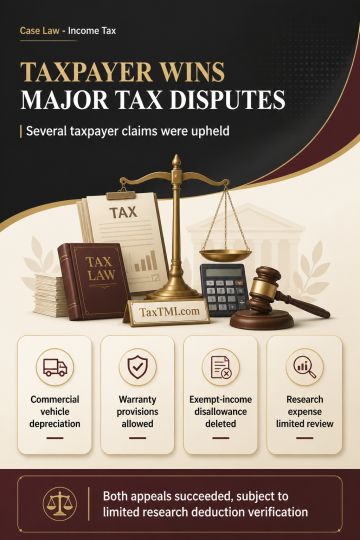
Commercial vehicle depreciation, scientifically determined warranty provisions and exempt-income disallowances were resolved in favour of the taxpayer...
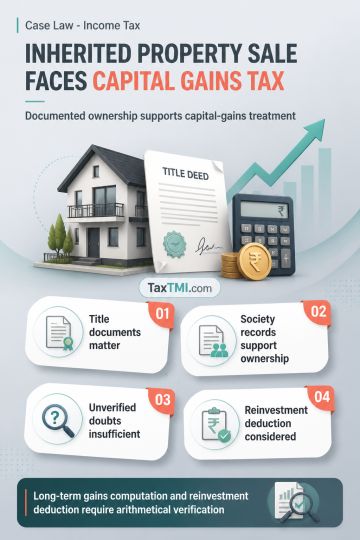
Inherited property sale proceeds require capital-gains treatment where ownership is supported by evidence, not suspicion or unverified signature doubt...
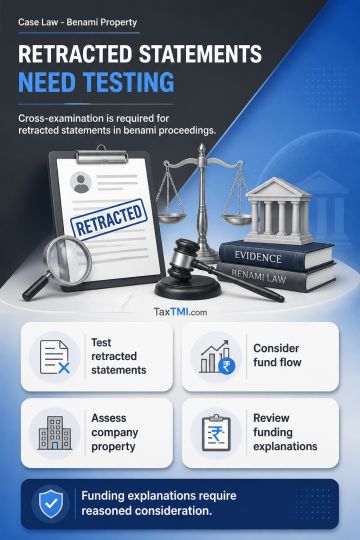
Cross-examination of retracted statements is essential where foundational evidence supports a benami allegation and documented funding explanations re...
Capital-goods exemption covers plant-modernisation accessories, while the import restriction applies only to earlier capital-goods components and spar...
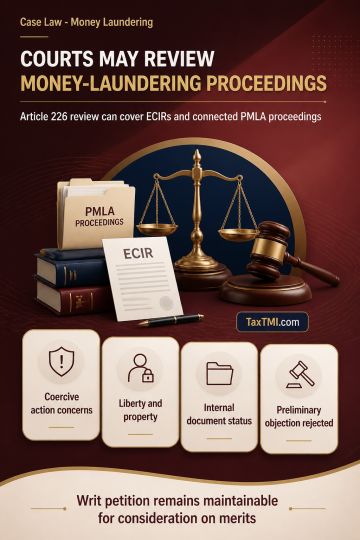
Constitutional judicial review permits challenges to ECIRs and connected money-laundering proceedings where coercive action affects fundamental intere...
In the case of 2024 (5) TMI 1099 before ITAT Mumbai, the issue was the validity of a reassessment order. The CIT (A) passed an order that contained different grounds than those raised by the assessee, indicating a lack of independent application of mind. The assessment order referred to in the caption did not match the one in the body of the order. The facts in the assessment order differed from those mentioned by the CIT (A). The grounds of appeal were also different between what the assessee submitted and what the CIT (A) included in the order. The ITAT found the CIT (A) had engaged in a 'cut & paste' exercise without proper consideration, leading to an unsustainable and perverse order. Consequently, the ITAT allowed all grounds of appeal, directing the CIT (A) to reconsider the case based on the actual facts and provide the assessee with a fair hearing. The appeal of the AO was allowed.
In the case of 2024 (5) TMI 1099 before ITAT Mumbai, the issue was the validity of a reassessment order. The CIT (A) passed an order that contained different grounds than those raised by the assessee, indicating a lack of independent application of mind. The assessment order referred to in the caption did not match the one in the body of the order. The facts in the assessment order differed from those mentioned by the CIT (A). The grounds of appeal were also different between what the assessee submitted and what the CIT (A) included in the order. The ITAT found the CIT (A) had engaged in a 'cut & paste' exercise without proper consideration, leading to an unsustainable and perverse order. Consequently, the ITAT allowed all grounds of appeal, directing the CIT (A) to reconsider the case based on the actual facts and provide the assessee with a fair hearing. The appeal of the AO was allowed.
Note: It is a system-generated summary and is for quick reference only.
 TaxTMI
 of 4782













 Join Channel


 TaxTMI
