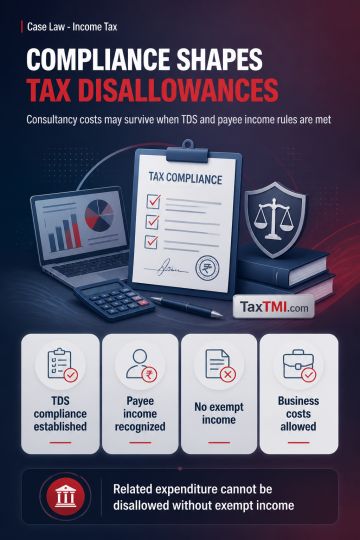
Tax deduction compliance and payee income recognition govern consultancy disallowance, while no exempt income prevents related expenditure disallowanc...
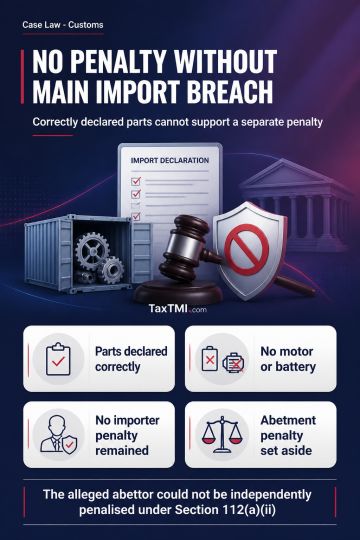
Derivative abetment liability fails when correctly declared imported components establish no underlying improper importation by the principal importer...
Tax exemption for regulatory authority income applies retrospectively, subject to non-commercial activity, unchanged income sources, and return filing...
The Instruction No. 10/2024-Customs issued by the Government of India clarifies the acceptance of Electronic Certificates of Origin (e-CoO) from Korea under the India-Korea Comprehensive Economic Partnership Agreement. The e-CoOs must adhere to specified requirements, including being issued in the prescribed format with a QR code. They are considered equivalent to manually issued certificates. Importers must upload e-CoOs on e-Sanchit for preferential benefits. A system in ICES verifies e-CoO details electronically, eliminating the need for physical defacement. Customs formations are instructed to implement this procedure. Advisory No. 31/2023 provides additional procedural guidance.
The Instruction No. 10/2024-Customs issued by the Government of India clarifies the acceptance of Electronic Certificates of Origin (e-CoO) from Korea under the India-Korea Comprehensive Economic Partnership Agreement. The e-CoOs must adhere to specified requirements, including being issued in the prescribed format with a QR code. They are considered equivalent to manually issued certificates. Importers must upload e-CoOs on e-Sanchit for preferential benefits. A system in ICES verifies e-CoO details electronically, eliminating the need for physical defacement. Customs formations are instructed to implement this procedure. Advisory No. 31/2023 provides additional procedural guidance.
Note: It is a system-generated summary and is for quick reference only.
 TaxTMI
 of 4803












 Join Channel


 TaxTMI