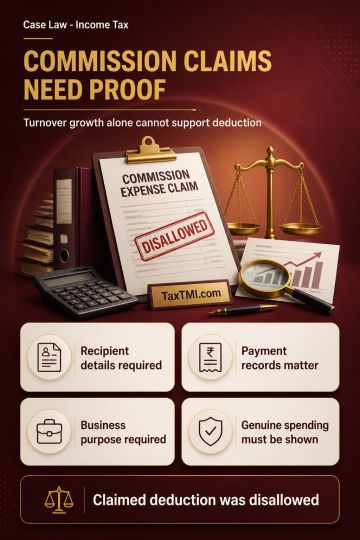
Business expenditure deduction requires proof of genuine commission payments and commercial allowability; turnover growth alone cannot validate the cl...
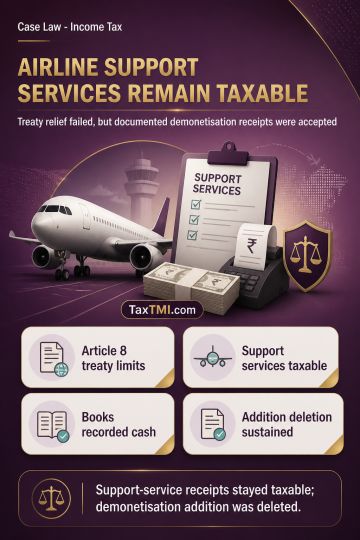
Article 8 treaty coverage excluded third-party airline support services, while documented demonetisation cash receipts remained accepted business inco...
Functional comparability under TNMM requires highway contract benchmarks to reflect operation, maintenance and transfer activities, requiring fresh be...
The Instruction No. 10/2024-Customs issued by the Government of India clarifies the acceptance of Electronic Certificates of Origin (e-CoO) from Korea under the India-Korea Comprehensive Economic Partnership Agreement. The e-CoOs must adhere to specified requirements, including being issued in the prescribed format with a QR code. They are considered equivalent to manually issued certificates. Importers must upload e-CoOs on e-Sanchit for preferential benefits. A system in ICES verifies e-CoO details electronically, eliminating the need for physical defacement. Customs formations are instructed to implement this procedure. Advisory No. 31/2023 provides additional procedural guidance.
The Instruction No. 10/2024-Customs issued by the Government of India clarifies the acceptance of Electronic Certificates of Origin (e-CoO) from Korea under the India-Korea Comprehensive Economic Partnership Agreement. The e-CoOs must adhere to specified requirements, including being issued in the prescribed format with a QR code. They are considered equivalent to manually issued certificates. Importers must upload e-CoOs on e-Sanchit for preferential benefits. A system in ICES verifies e-CoO details electronically, eliminating the need for physical defacement. Customs formations are instructed to implement this procedure. Advisory No. 31/2023 provides additional procedural guidance.
Note: It is a system-generated summary and is for quick reference only.
 TaxTMI
 of 4803








 Join Channel


 TaxTMI