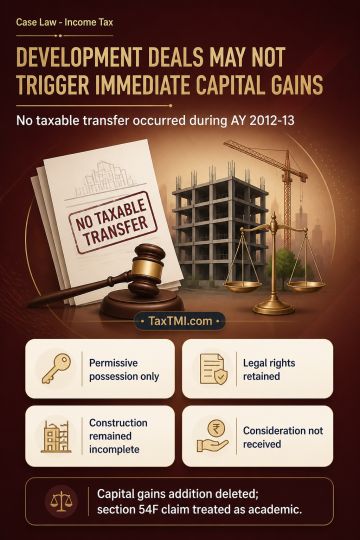
Development agreements require legal possession or effective enjoyment for capital gains transfer; permissive possession and deferred consideration de...
Prolonged sterilisation of development rights supports capital-gains treatment, while business-income disallowances cannot govern capital-gains comput...
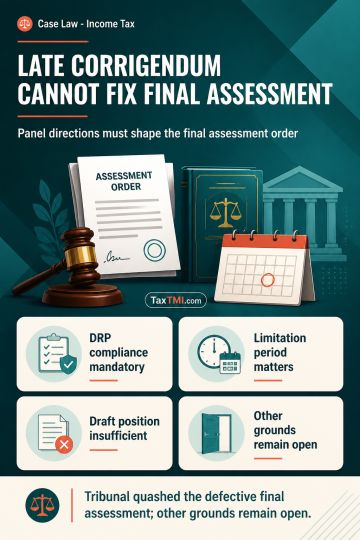
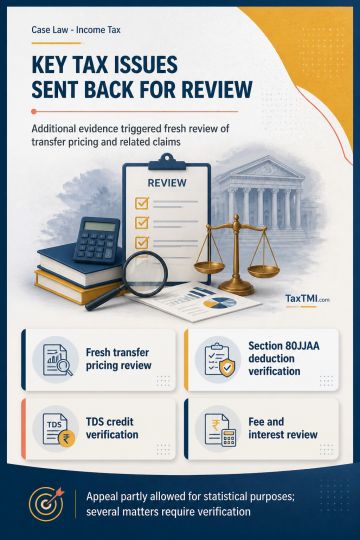
Additional evidence in transfer pricing dispute leads to fresh examination, while tax deductions, TDS credit, fee and refund interest require verifica...
Category II AIF pass-through taxation preserves non-business income character; investment receipts cannot be reclassified without applying recognised ...
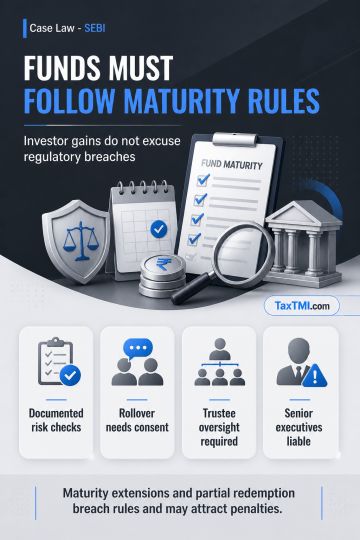
Mutual fund maturity rules require proper rollover, redemption, disclosure, and due diligence; investor gains cannot excuse regulatory breaches or pen...
The Madhya Pradesh High Court examined the scope of judicial review u/s 212(1)(c) of the Companies Act, 2013 regarding the Central Government's sanction for an investigation by the SFIO. The court held that SFIO investigation on transactions already addressed u/s 66 of the IBC would amount to double jeopardy. It emphasized the necessity of public interest for such investigations and found no such element in this case. The court noted that the company's functions were halted due to CIRP and pending liquidation, indicating no public interest or prima facie case for the investigation. The court ruled the sanction as arbitrary, illegal, and lacking a reasoned order, thus setting it aside and quashing any actions taken based on it.
The Madhya Pradesh High Court examined the scope of judicial review u/s 212(1)(c) of the Companies Act, 2013 regarding the Central Government's sanction for an investigation by the SFIO. The court held that SFIO investigation on transactions already addressed u/s 66 of the IBC would amount to double jeopardy. It emphasized the necessity of public interest for such investigations and found no such element in this case. The court noted that the company's functions were halted due to CIRP and pending liquidation, indicating no public interest or prima facie case for the investigation. The court ruled the sanction as arbitrary, illegal, and lacking a reasoned order, thus setting it aside and quashing any actions taken based on it.
Note: It is a system-generated summary and is for quick reference only.
 TaxTMI
 of 4807












 Join Channel


 TaxTMI