Transaction value cannot be rejected solely on non-statutory valuation guidelines without corroborative evidence supporting reassessment of final cust...
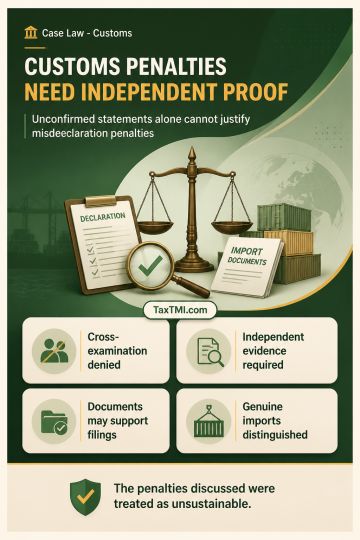
Cross-examination rights and corroborated evidence limit customs penalties for misdeclaration in genuine import transactions involving documented clea...
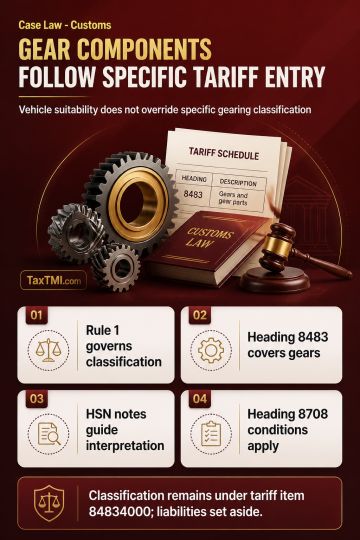
Tariff classification of vehicle gear components follows the specific gearing entry, displacing motor-vehicle parts classification and related liabili...
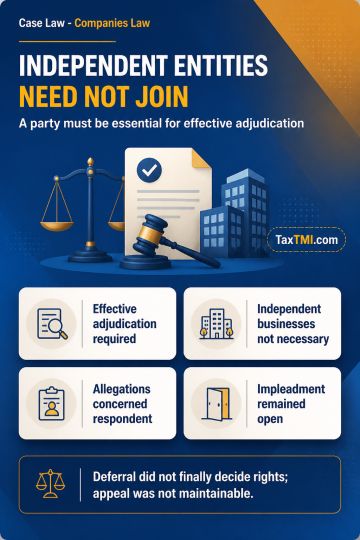
Necessary-party requirements limit impleadment of independent entities, while deferred consideration does not create an appealable adverse determinati...
Food supplement classification requires common parlance and authoritative tests, preventing treatment as proprietary Ayurvedic medicines without suppo...
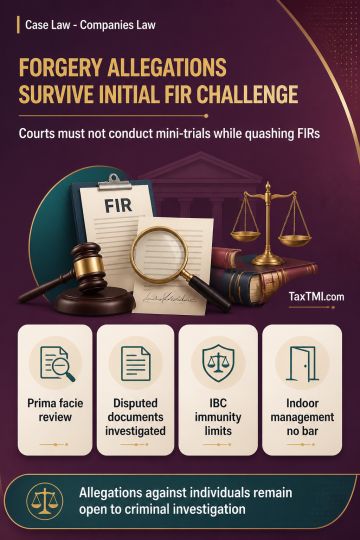
The Madhya Pradesh High Court examined the scope of judicial review u/s 212(1)(c) of the Companies Act, 2013 regarding the Central Government's sanction for an investigation by the SFIO. The court held that SFIO investigation on transactions already addressed u/s 66 of the IBC would amount to double jeopardy. It emphasized the necessity of public interest for such investigations and found no such element in this case. The court noted that the company's functions were halted due to CIRP and pending liquidation, indicating no public interest or prima facie case for the investigation. The court ruled the sanction as arbitrary, illegal, and lacking a reasoned order, thus setting it aside and quashing any actions taken based on it.
The Madhya Pradesh High Court examined the scope of judicial review u/s 212(1)(c) of the Companies Act, 2013 regarding the Central Government's sanction for an investigation by the SFIO. The court held that SFIO investigation on transactions already addressed u/s 66 of the IBC would amount to double jeopardy. It emphasized the necessity of public interest for such investigations and found no such element in this case. The court noted that the company's functions were halted due to CIRP and pending liquidation, indicating no public interest or prima facie case for the investigation. The court ruled the sanction as arbitrary, illegal, and lacking a reasoned order, thus setting it aside and quashing any actions taken based on it.
Note: It is a system-generated summary and is for quick reference only.
 TaxTMI
 of 4805














 Join Channel


 TaxTMI
