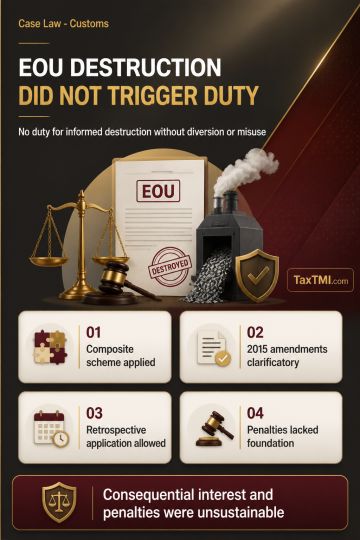
Defined public benefit can retain charitable character; registration renewal requires examining genuine activities and legal compliance, not surplus a...
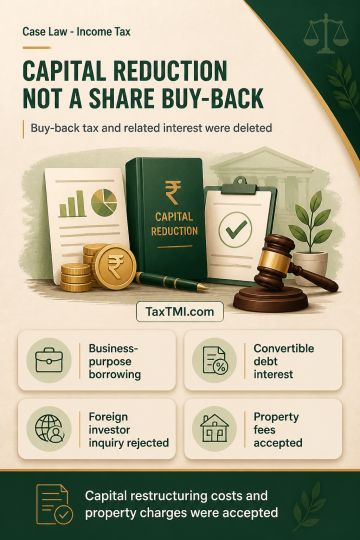
Capital reduction is distinct from share buy-back, preventing buy-back tax; restructuring interest and related business deductions also survive scruti...
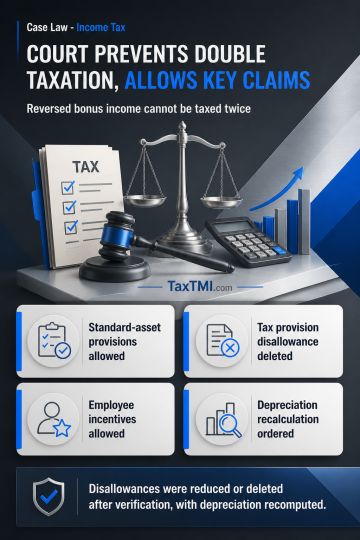
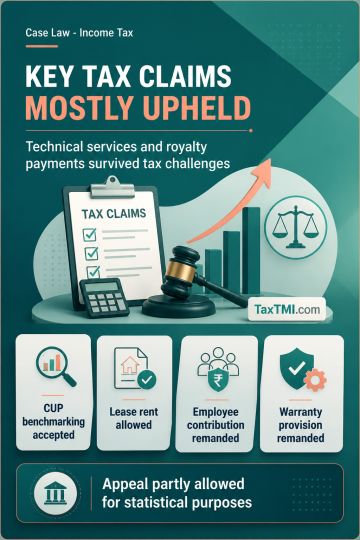
Transfer pricing and tax deductions upheld on established principles, while employee contributions and warranty provisions returned for fresh examinat...
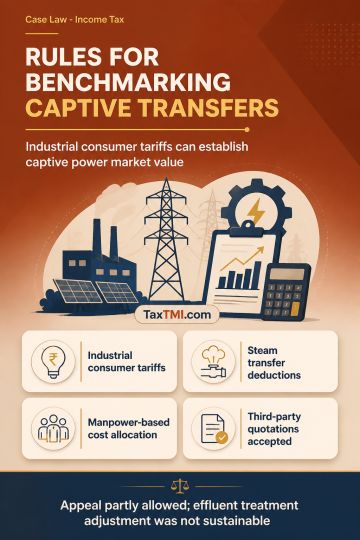
Captive transfer pricing relies on industrial consumer tariffs, while genuine quotations can benchmark effluent treatment transfers under the Other Me...
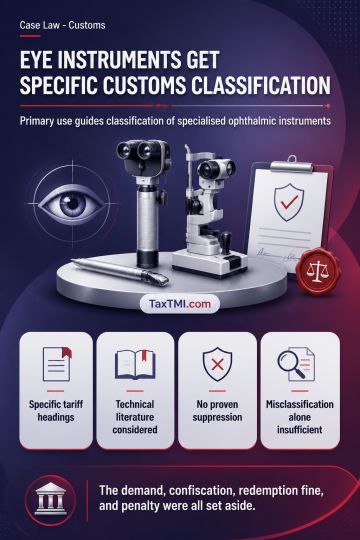
Specific tariff classification for ophthalmic instruments and extended limitation principles determine the treatment of duty demands, confiscation, an...
In the case before ITAT Delhi, the issue was the admissibility of additional evidence related to Long Term Capital Gains (LTCG) and deduction under section 54F. The assessee submitted evidence to prove that the agricultural land sold was not a capital asset and that the sale consideration was reinvested as per section 54F. The Tribunal held that the additional evidence should be considered under Rule 46A, despite not being presented before the Assessing Officer (AO). The CIT(A) erred in not admitting the evidence, citing a Supreme Court decision. The Tribunal emphasized that the CIT(A) has powers equal to the AO and can accept additional claims without the need for the assessee to revise the return. The appeal was allowed for statistical purposes.
In the case before ITAT Delhi, the issue was the admissibility of additional evidence related to Long Term Capital Gains (LTCG) and deduction under section 54F. The assessee submitted evidence to prove that the agricultural land sold was not a capital asset and that the sale consideration was reinvested as per section 54F. The Tribunal held that the additional evidence should be considered under Rule 46A, despite not being presented before the Assessing Officer (AO). The CIT(A) erred in not admitting the evidence, citing a Supreme Court decision. The Tribunal emphasized that the CIT(A) has powers equal to the AO and can accept additional claims without the need for the assessee to revise the return. The appeal was allowed for statistical purposes.
Note: It is a system-generated summary and is for quick reference only.
 TaxTMI
 of 4805







 Join Channel


 TaxTMI