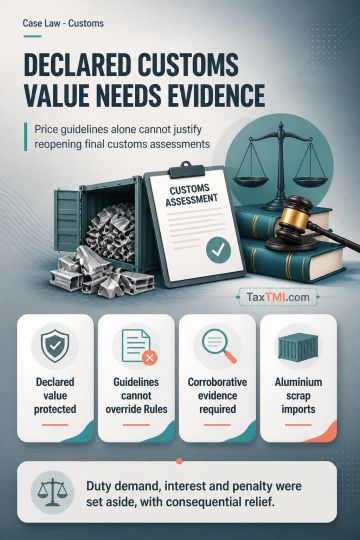
Transaction value cannot be rejected solely on non-statutory valuation guidelines without corroborative evidence supporting reassessment of final cust...
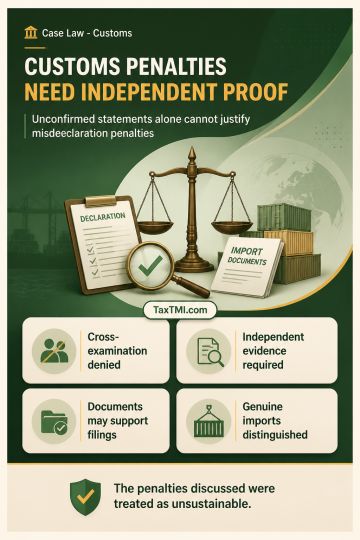
Cross-examination rights and corroborated evidence limit customs penalties for misdeclaration in genuine import transactions involving documented clea...
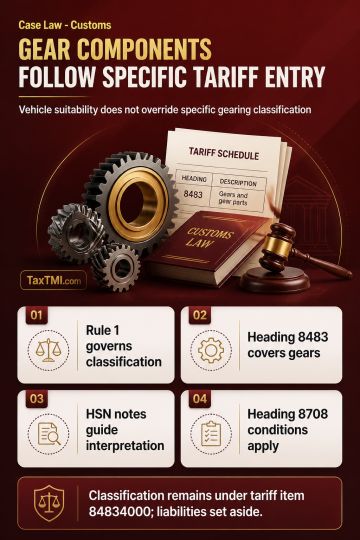
Tariff classification of vehicle gear components follows the specific gearing entry, displacing motor-vehicle parts classification and related liabili...
Necessary-party requirements limit impleadment of independent entities, while deferred consideration does not create an appealable adverse determinati...
Food supplement classification requires common parlance and authoritative tests, preventing treatment as proprietary Ayurvedic medicines without suppo...
In the case before ITAT Delhi, the issue was the admissibility of additional evidence related to Long Term Capital Gains (LTCG) and deduction under section 54F. The assessee submitted evidence to prove that the agricultural land sold was not a capital asset and that the sale consideration was reinvested as per section 54F. The Tribunal held that the additional evidence should be considered under Rule 46A, despite not being presented before the Assessing Officer (AO). The CIT(A) erred in not admitting the evidence, citing a Supreme Court decision. The Tribunal emphasized that the CIT(A) has powers equal to the AO and can accept additional claims without the need for the assessee to revise the return. The appeal was allowed for statistical purposes.
In the case before ITAT Delhi, the issue was the admissibility of additional evidence related to Long Term Capital Gains (LTCG) and deduction under section 54F. The assessee submitted evidence to prove that the agricultural land sold was not a capital asset and that the sale consideration was reinvested as per section 54F. The Tribunal held that the additional evidence should be considered under Rule 46A, despite not being presented before the Assessing Officer (AO). The CIT(A) erred in not admitting the evidence, citing a Supreme Court decision. The Tribunal emphasized that the CIT(A) has powers equal to the AO and can accept additional claims without the need for the assessee to revise the return. The appeal was allowed for statistical purposes.
Note: It is a system-generated summary and is for quick reference only.
 TaxTMI
 of 4805














 Join Channel


 TaxTMI
