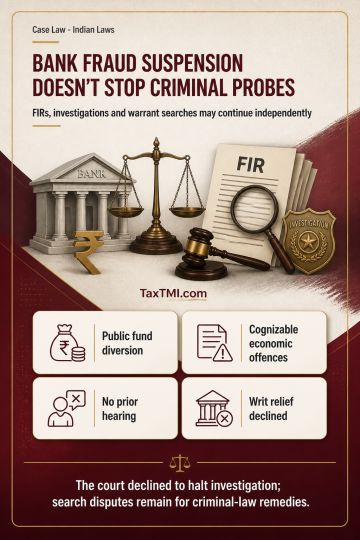
Administrative fraud classification suspension does not halt independent criminal investigation or warrant-based searches into alleged economic offenc...
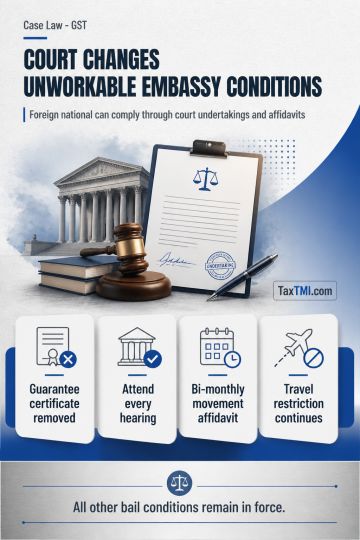
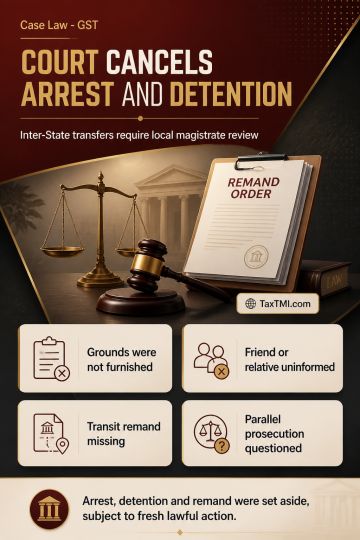
Arrest safeguards and transit remand requirements invalidated detention following inter-State transfer without communicated grounds or magistrate auth...
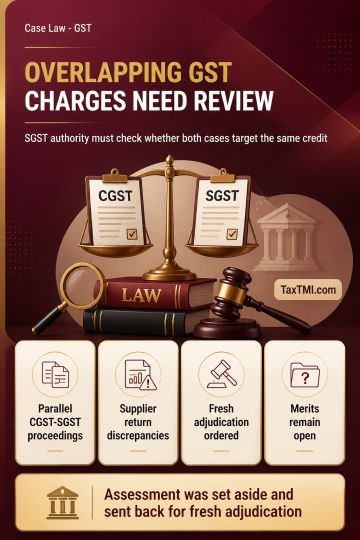
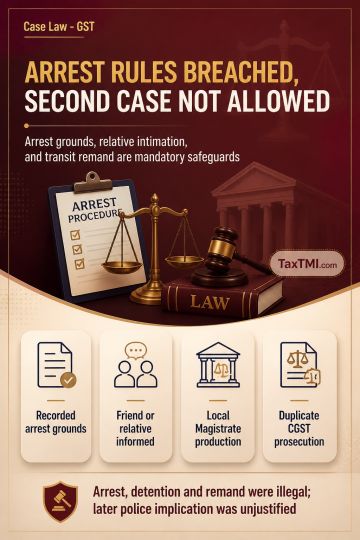
Arrest safeguards require disclosed grounds, relative intimation and transit remand, while duplicate prosecution under the CGST framework is unsustain...
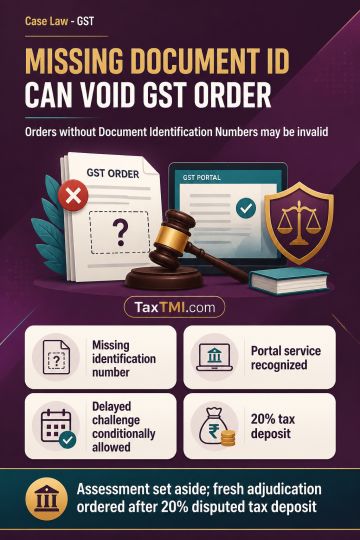
Document Identification Number defects can invalidate GST assessments, with delayed challenges entertained conditionally where patent irregularities e...
The ITAT Jodhpur dealt with a case involving addition u/s 68 of the Income Tax Act concerning alleged bogus share application money. The Investigation Wing provided specific information, but the CIT(A) deleted the addition after finding the investor companies' identity, creditworthiness, and genuineness were proven by the assessee. The tribunal upheld the CIT(A)'s decision, stating the AO lacked a basis for the addition. The commission expenses for the alleged bogus share application money were deemed unnecessary due to the genuine nature of the funds. The reassessment proceedings' validity was not directly addressed by the CIT(A) but was considered decided against the assessee based on a legal precedent. The tribunal allowed the assessee to argue the reassessment issue despite not appealing the CIT(A)'s decision, in line with ITAT Rules.
The ITAT Jodhpur dealt with a case involving addition u/s 68 of the Income Tax Act concerning alleged bogus share application money. The Investigation Wing provided specific information, but the CIT(A) deleted the addition after finding the investor companies' identity, creditworthiness, and genuineness were proven by the assessee. The tribunal upheld the CIT(A)'s decision, stating the AO lacked a basis for the addition. The commission expenses for the alleged bogus share application money were deemed unnecessary due to the genuine nature of the funds. The reassessment proceedings' validity was not directly addressed by the CIT(A) but was considered decided against the assessee based on a legal precedent. The tribunal allowed the assessee to argue the reassessment issue despite not appealing the CIT(A)'s decision, in line with ITAT Rules.
Note: It is a system-generated summary and is for quick reference only.
 TaxTMI
 of 4803




 Join Channel


 TaxTMI
