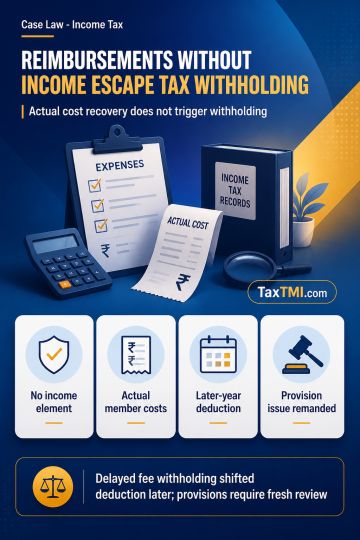
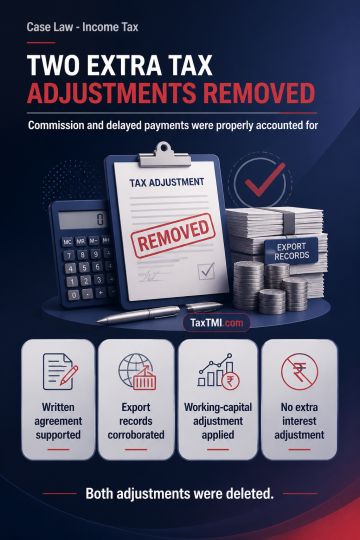
Pure reimbursement without income element escapes tax withholding, while delayed withholding and unsupported provisions face deferred or renewed scrut...
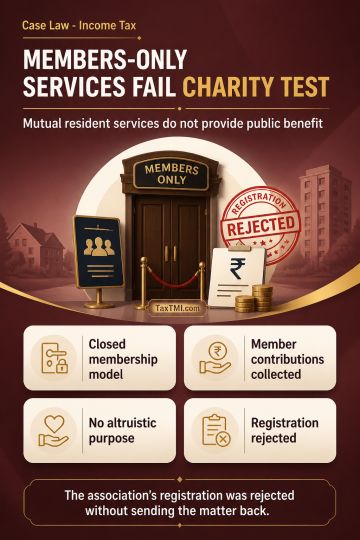
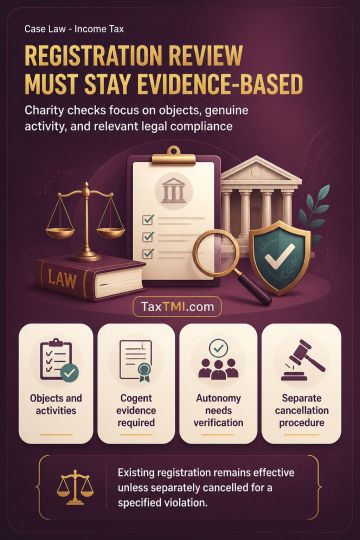
Public benefit requirement defeats charitable registration where residents' association services are reciprocal, member-only facilities governed by mu...
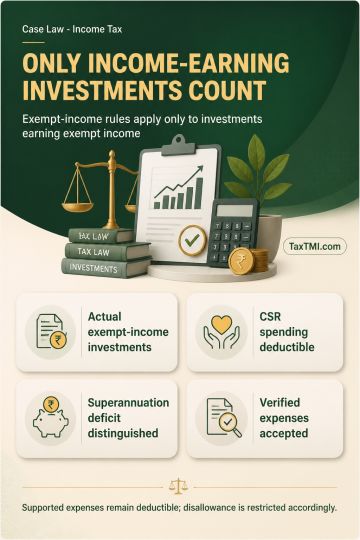
Exempt-income expenditure disallowance is confined to investments that actually generated exempt income, while supported business expenses remain dedu...
Objective characteristics and principal use govern mining-tyre classification, while fresh advance ruling applications may rely on additional technica...
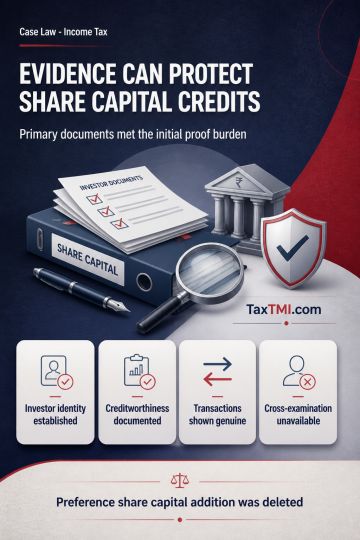
The ITAT Jodhpur dealt with a case involving addition u/s 68 of the Income Tax Act concerning alleged bogus share application money. The Investigation Wing provided specific information, but the CIT(A) deleted the addition after finding the investor companies' identity, creditworthiness, and genuineness were proven by the assessee. The tribunal upheld the CIT(A)'s decision, stating the AO lacked a basis for the addition. The commission expenses for the alleged bogus share application money were deemed unnecessary due to the genuine nature of the funds. The reassessment proceedings' validity was not directly addressed by the CIT(A) but was considered decided against the assessee based on a legal precedent. The tribunal allowed the assessee to argue the reassessment issue despite not appealing the CIT(A)'s decision, in line with ITAT Rules.
The ITAT Jodhpur dealt with a case involving addition u/s 68 of the Income Tax Act concerning alleged bogus share application money. The Investigation Wing provided specific information, but the CIT(A) deleted the addition after finding the investor companies' identity, creditworthiness, and genuineness were proven by the assessee. The tribunal upheld the CIT(A)'s decision, stating the AO lacked a basis for the addition. The commission expenses for the alleged bogus share application money were deemed unnecessary due to the genuine nature of the funds. The reassessment proceedings' validity was not directly addressed by the CIT(A) but was considered decided against the assessee based on a legal precedent. The tribunal allowed the assessee to argue the reassessment issue despite not appealing the CIT(A)'s decision, in line with ITAT Rules.
Note: It is a system-generated summary and is for quick reference only.
 TaxTMI
 of 4803








 Join Channel


 TaxTMI
