Transfer pricing and tax deductions upheld on established principles, while employee contributions and warranty provisions returned for fresh examinat...
Captive transfer pricing relies on industrial consumer tariffs, while genuine quotations can benchmark effluent treatment transfers under the Other Me...
Specific tariff classification for ophthalmic instruments and extended limitation principles determine the treatment of duty demands, confiscation, an...
Integrated golf function determines classification, placing launch monitors and simulators under other golf equipment rather than measuring instrument...
Public servant status under anti-corruption law extends to recognised stock exchange leadership; constitutional and sanction challenges do not succeed...
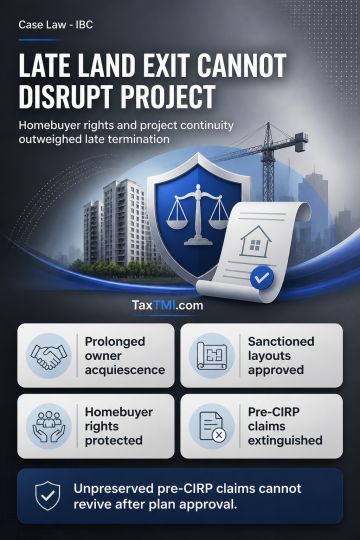
Acquiescence, homebuyer protection and clean-slate resolution principles prevent landowners from disrupting an integrated project through late termina...
The Calcutta High Court reviewed a case involving a revision u/s 263 regarding the addition u/s 68 for a purportedly bogus claim of exemption of Long Term Capital Gain from the sale of shares of a penny stock. The Principal Commissioner of Income Tax (PCIT) found the assessment to be prima facie erroneous and prejudicial to revenue, leading to the issuance of a show cause notice. The PCIT independently evaluated the assessment records, concluding that the assessing officer should have treated the credit as bogus and disallowed the exemption u/s 10(38). The High Court differentiated this case from a previous ruling involving Sinhotia Metals and Minerals Pvt. Ltd., emphasizing that the PCIT's decision was valid in this context. The Court overturned the Tribunal's decision, reinstating the PCIT's order u/s 263.
The Calcutta High Court reviewed a case involving a revision u/s 263 regarding the addition u/s 68 for a purportedly bogus claim of exemption of Long Term Capital Gain from the sale of shares of a penny stock. The Principal Commissioner of Income Tax (PCIT) found the assessment to be prima facie erroneous and prejudicial to revenue, leading to the issuance of a show cause notice. The PCIT independently evaluated the assessment records, concluding that the assessing officer should have treated the credit as bogus and disallowed the exemption u/s 10(38). The High Court differentiated this case from a previous ruling involving Sinhotia Metals and Minerals Pvt. Ltd., emphasizing that the PCIT's decision was valid in this context. The Court overturned the Tribunal's decision, reinstating the PCIT's order u/s 263.
Note: It is a system-generated summary and is for quick reference only.
 TaxTMI
 of 4805




















 Join Channel


 TaxTMI