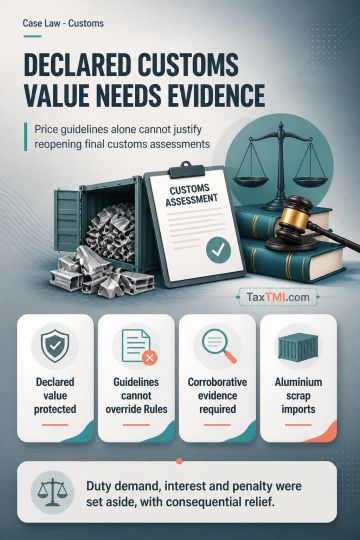
Transaction value cannot be rejected solely on non-statutory valuation guidelines without corroborative evidence supporting reassessment of final cust...
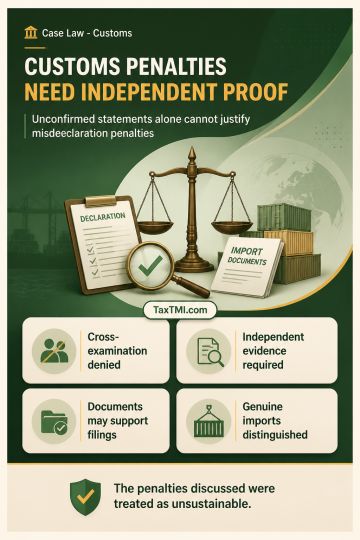
Cross-examination rights and corroborated evidence limit customs penalties for misdeclaration in genuine import transactions involving documented clea...
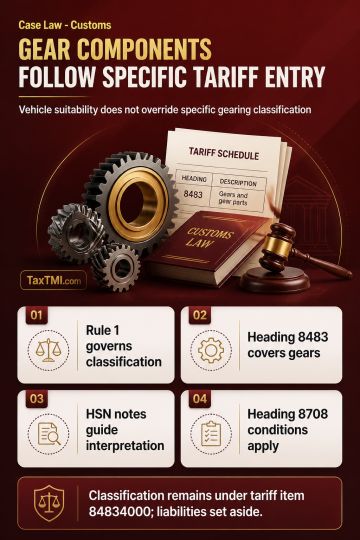
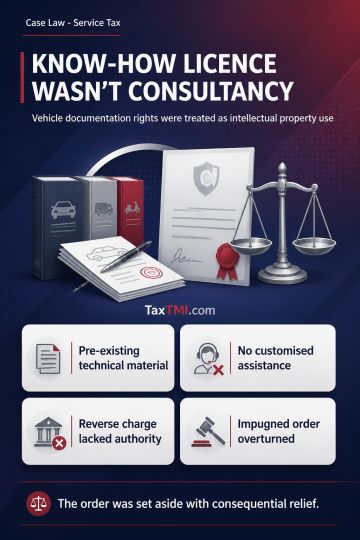
Tariff classification of vehicle gear components follows the specific gearing entry, displacing motor-vehicle parts classification and related liabili...
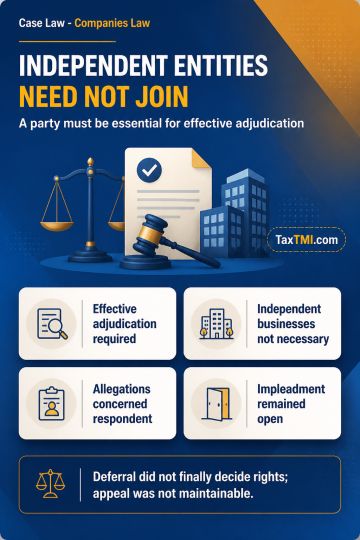
Necessary-party requirements limit impleadment of independent entities, while deferred consideration does not create an appealable adverse determinati...
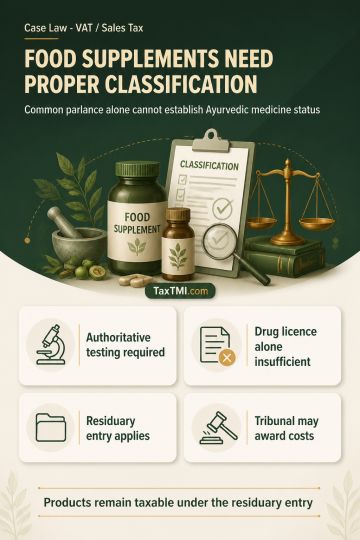
Food supplement classification requires common parlance and authoritative tests, preventing treatment as proprietary Ayurvedic medicines without suppo...
The Calcutta High Court reviewed a case involving a revision u/s 263 regarding the addition u/s 68 for a purportedly bogus claim of exemption of Long Term Capital Gain from the sale of shares of a penny stock. The Principal Commissioner of Income Tax (PCIT) found the assessment to be prima facie erroneous and prejudicial to revenue, leading to the issuance of a show cause notice. The PCIT independently evaluated the assessment records, concluding that the assessing officer should have treated the credit as bogus and disallowed the exemption u/s 10(38). The High Court differentiated this case from a previous ruling involving Sinhotia Metals and Minerals Pvt. Ltd., emphasizing that the PCIT's decision was valid in this context. The Court overturned the Tribunal's decision, reinstating the PCIT's order u/s 263.
The Calcutta High Court reviewed a case involving a revision u/s 263 regarding the addition u/s 68 for a purportedly bogus claim of exemption of Long Term Capital Gain from the sale of shares of a penny stock. The Principal Commissioner of Income Tax (PCIT) found the assessment to be prima facie erroneous and prejudicial to revenue, leading to the issuance of a show cause notice. The PCIT independently evaluated the assessment records, concluding that the assessing officer should have treated the credit as bogus and disallowed the exemption u/s 10(38). The High Court differentiated this case from a previous ruling involving Sinhotia Metals and Minerals Pvt. Ltd., emphasizing that the PCIT's decision was valid in this context. The Court overturned the Tribunal's decision, reinstating the PCIT's order u/s 263.
Note: It is a system-generated summary and is for quick reference only.
 TaxTMI
 of 4800



 Join Channel


 TaxTMI
