Retention of seized property survives where recorded reasons support proceeds of crime, while stayed investigation periods are excluded from limitatio...
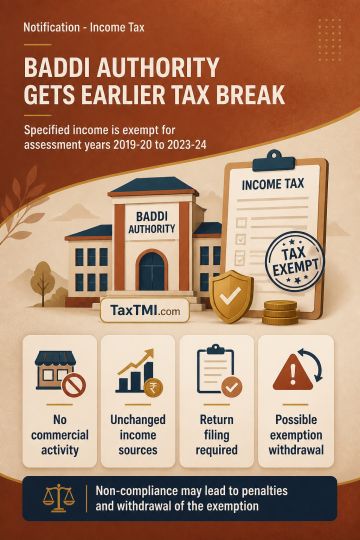
Specified income of Baddi Barotiwala Nalagarh Development Authority receives conditional tax exemption, retrospectively covering its designated assess...
Specified development authority income receives retrospective tax exemption, subject to non-commercial activity, unchanged income sources, and return-...
Unified Brand India framework introduces voluntary Trust Mark certification and funding support for export branding, packaging and global promotional ...
Origin Declaration authentication governs preferential tariff claims under India-UK CETA, requiring a validated reference number before import clearan...
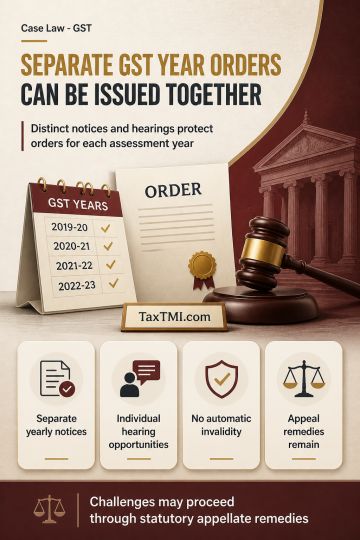
Separate assessment orders for different years remain valid when distinct notices and hearing opportunities prevent prejudice from combined proceeding...
The ITAT Chennai ruled on deduction u/s 80IA, focusing on determining the market value of power supplied by the assessee to its industrial units. The AO argued for using rates fixed by Tariff Regulatory Commission, while the assessee supported using the average price of power purchased. The Supreme Court clarified that "market value" refers to the price in a free trade environment. It held that the market value should be based on the rate at which the State Electricity Board supplied power to consumers, not the rate sold to a supplier. The ITAT noted that the AO allowed the deduction for the initial year and subsequent years. The assessee used a price of ₹5.60 per unit based on charges paid to Tamilnadu Electricity Board. Ultimately, the ITAT held that the State Electricity Board's rate should be considered the market value for claiming deduction u/s 80IA, dismissing the Revenue's grounds.
The ITAT Chennai ruled on deduction u/s 80IA, focusing on determining the market value of power supplied by the assessee to its industrial units. The AO argued for using rates fixed by Tariff Regulatory Commission, while the assessee supported using the average price of power purchased. The Supreme Court clarified that "market value" refers to the price in a free trade environment. It held that the market value should be based on the rate at which the State Electricity Board supplied power to consumers, not the rate sold to a supplier. The ITAT noted that the AO allowed the deduction for the initial year and subsequent years. The assessee used a price of ₹5.60 per unit based on charges paid to Tamilnadu Electricity Board. Ultimately, the ITAT held that the State Electricity Board's rate should be considered the market value for claiming deduction u/s 80IA, dismissing the Revenue's grounds.
Note: It is a system-generated summary and is for quick reference only.
 TaxTMI
 of 4801












 Join Channel


 TaxTMI