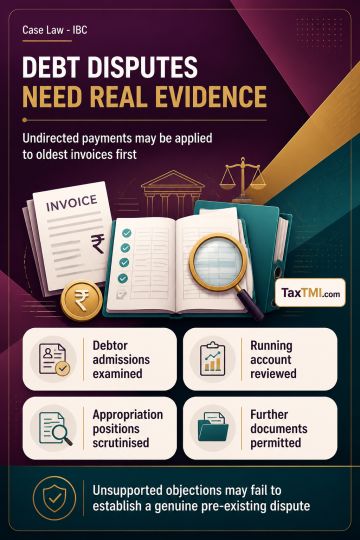
Pre-existing operational debt disputes require genuine evidence, while undirected running-account payments may be appropriated on a first-in-first-out...
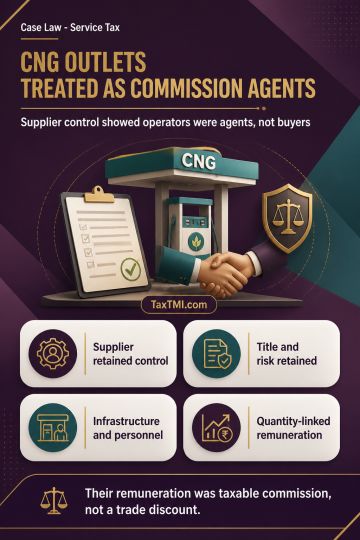
Agency in CNG distribution makes outlet operators commission agents, rendering taxable Business Auxiliary Service rather than purchasing goods for res...
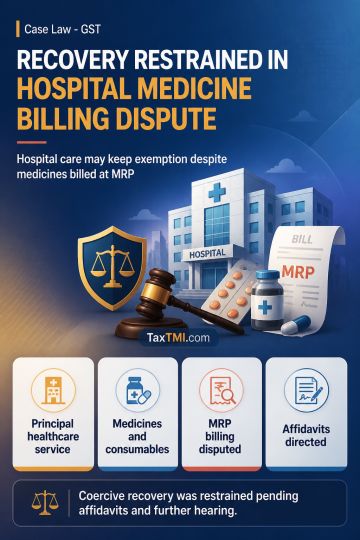
Composite inpatient healthcare supply may retain exemption despite MRP medicine billing, while separate taxable sale characterisation remains disputed...
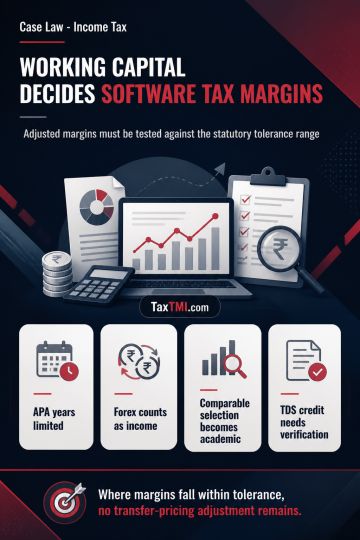
Working-capital adjustment determines whether software-services transfer-pricing margins fall within the statutory tolerance range, eliminating any ad...
Page of 4798
Press 'Enter' after typing page number.
921 to 940 of 95957 Results
❮
❯
❯❯
0 / 200
Expand Note
Add to Folder
No Folders have been created
+
Are you sure you want to delete "My most important" ?
The ITAT Chennai ruled on deduction u/s 80IA, focusing on determining the market value of power supplied by the assessee to its industrial units. The AO argued for using rates fixed by Tariff Regulatory Commission, while the assessee supported using the average price of power purchased. The Supreme Court clarified that "market value" refers to the price in a free trade environment. It held that the market value should be based on the rate at which the State Electricity Board supplied power to consumers, not the rate sold to a supplier. The ITAT noted that the AO allowed the deduction for the initial year and subsequent years. The assessee used a price of ₹5.60 per unit based on charges paid to Tamilnadu Electricity Board. Ultimately, the ITAT held that the State Electricity Board's rate should be considered the market value for claiming deduction u/s 80IA, dismissing the Revenue's grounds.
The ITAT Chennai ruled on deduction u/s 80IA, focusing on determining the market value of power supplied by the assessee to its industrial units. The AO argued for using rates fixed by Tariff Regulatory Commission, while the assessee supported using the average price of power purchased. The Supreme Court clarified that "market value" refers to the price in a free trade environment. It held that the market value should be based on the rate at which the State Electricity Board supplied power to consumers, not the rate sold to a supplier. The ITAT noted that the AO allowed the deduction for the initial year and subsequent years. The assessee used a price of ₹5.60 per unit based on charges paid to Tamilnadu Electricity Board. Ultimately, the ITAT held that the State Electricity Board's rate should be considered the market value for claiming deduction u/s 80IA, dismissing the Revenue's grounds.
Note: It is a system-generated summary and is for quick reference only.
 TaxTMI
 of 4798







 Join Channel


 TaxTMI