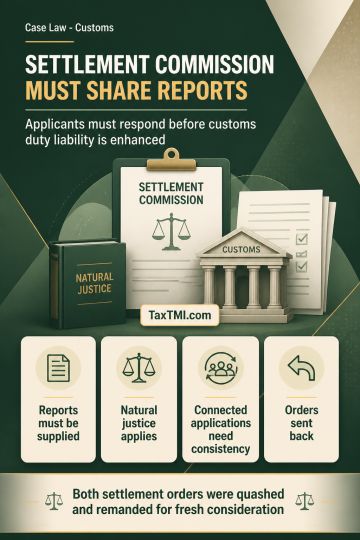
Opportunity to respond to jurisdictional reports is mandatory before customs settlement duty enhancement; connected applications require consistent ad...
Specific customs headings for scaffolding components prevail over general classification, invalidating misclassification proceedings and enabling with...
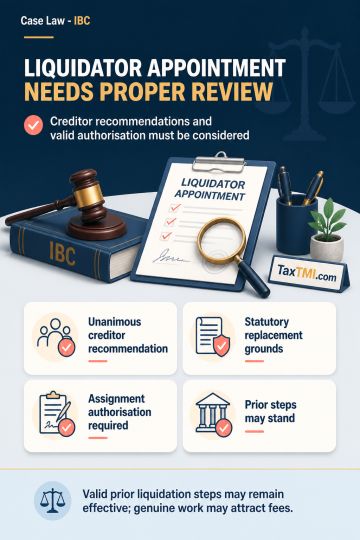
Liquidator appointment under Section 34 requires consideration of creditor recommendations, valid professional authorisation, and preservation of vali...
The NCLAT upheld the order of NCLAT dismissing an application for resolution as the Corporate Debtor's name was struck off by the RoC. The application under Section 9 was questioned whether it was for winding up or CIRP initiation. The Tribunal clarified that winding up involves company dissolution and asset liquidation for creditor payment, while CIRP aims at company revival. The Code is not a debt recovery mechanism but a revival tool. CIRP safeguards the Corporate Debtor's interests and aims at maximizing asset value. Section 252(3) provides appeal rights for challenging RoC orders. The Appellate Tribunal found no errors in the Adjudicating Authority's order and dismissed the appeal.
The NCLAT upheld the order of NCLAT dismissing an application for resolution as the Corporate Debtor's name was struck off by the RoC. The application under Section 9 was questioned whether it was for winding up or CIRP initiation. The Tribunal clarified that winding up involves company dissolution and asset liquidation for creditor payment, while CIRP aims at company revival. The Code is not a debt recovery mechanism but a revival tool. CIRP safeguards the Corporate Debtor's interests and aims at maximizing asset value. Section 252(3) provides appeal rights for challenging RoC orders. The Appellate Tribunal found no errors in the Adjudicating Authority's order and dismissed the appeal.
Note: It is a system-generated summary and is for quick reference only.
 TaxTMI
 of 4792










 Join Channel


 TaxTMI