Receipt of immovable property requires actual possession or enjoyment; redevelopment allotments exchanged for tenancy rights fall outside deemed incom...
Section 80P deduction covers Souharda credit societies, including qualifying surplus-deposit interest, subject to member KYC verification for cash dep...
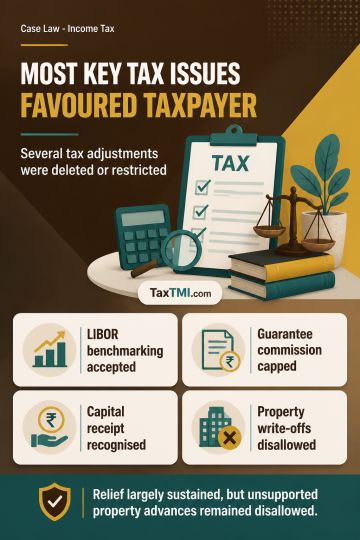
Transfer-pricing benchmarking and capital-receipt principles sustained taxpayer relief, while unsupported property-advance write-offs remained disallo...
The Karnataka High Court examined a case involving misappropriation of money collected from punters for GST and TDS payments. The court held that the allegations in the FIR disclosed a cognizable offense, rejecting the petitioners' argument that the police procedure was contrary to legal principles. The court emphasized that Section 482 of the Criminal Procedure Code should not be used to thwart a legitimate prosecution. The court found that the allegations and evidence collected during the investigation established a prima facie case of a cognizable offense, including serious allegations of misappropriation of funds. Consequently, the petition to quash the FIR was dismissed, allowing the investigation to proceed.
The Karnataka High Court examined a case involving misappropriation of money collected from punters for GST and TDS payments. The court held that the allegations in the FIR disclosed a cognizable offense, rejecting the petitioners' argument that the police procedure was contrary to legal principles. The court emphasized that Section 482 of the Criminal Procedure Code should not be used to thwart a legitimate prosecution. The court found that the allegations and evidence collected during the investigation established a prima facie case of a cognizable offense, including serious allegations of misappropriation of funds. Consequently, the petition to quash the FIR was dismissed, allowing the investigation to proceed.
Note: It is a system-generated summary and is for quick reference only.
 TaxTMI
 of 4796


















 Join Channel


 TaxTMI
