Inherited property sale proceeds require capital-gains treatment where ownership is supported by evidence, not suspicion or unverified signature doubt...
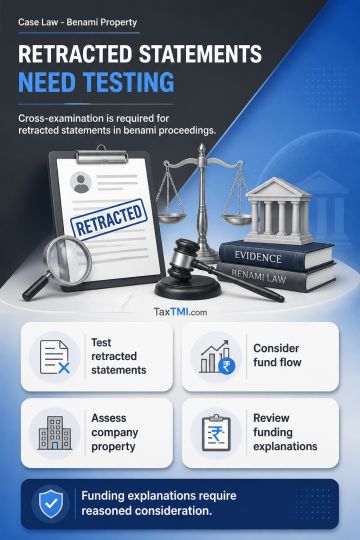
Cross-examination of retracted statements is essential where foundational evidence supports a benami allegation and documented funding explanations re...
Capital-goods exemption covers plant-modernisation accessories, while the import restriction applies only to earlier capital-goods components and spar...
Constitutional judicial review permits challenges to ECIRs and connected money-laundering proceedings where coercive action affects fundamental intere...
The Delhi High Court upheld the order quashing of the disciplinary proceedings against the Regional Director (NR) of ROC, emphasizing the distinction between executive and quasi-judicial functions under the Act. The court held that an authority's act can be quasi-judicial even without two competing parties, considering factors like nature of rights affected. Referring to relevant case law, the court highlighted the need for objective criteria and consideration of objections for a function to be quasi-judicial. The court noted the elaborate procedure under Rule 30 for shifting applications, requiring examination of objections and reports from RoCs. Despite allegations of misconduct, the court found no fault in the respondent's approval of shifting applications, given reliance on information provided and lack of alerts about pending inspections. The court dismissed the petition, emphasizing the respondent's heavy workload and lack of evidence against other officers involved.
The Delhi High Court upheld the order quashing of the disciplinary proceedings against the Regional Director (NR) of ROC, emphasizing the distinction between executive and quasi-judicial functions under the Act. The court held that an authority's act can be quasi-judicial even without two competing parties, considering factors like nature of rights affected. Referring to relevant case law, the court highlighted the need for objective criteria and consideration of objections for a function to be quasi-judicial. The court noted the elaborate procedure under Rule 30 for shifting applications, requiring examination of objections and reports from RoCs. Despite allegations of misconduct, the court found no fault in the respondent's approval of shifting applications, given reliance on information provided and lack of alerts about pending inspections. The court dismissed the petition, emphasizing the respondent's heavy workload and lack of evidence against other officers involved.
Note: It is a system-generated summary and is for quick reference only.
 TaxTMI
 of 4784




















 Join Channel


 TaxTMI