Approved resolution plans extinguish unsubmitted pre-approval tax claims, preventing later recovery outside the insolvency process and preserving a cl...
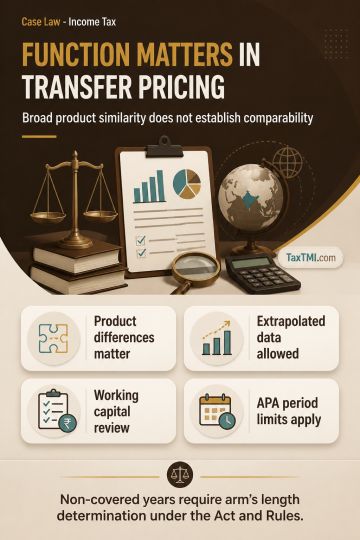
Transfer pricing comparability requires functional alignment and permits working capital adjustment, while APA margins cannot govern non-covered years...
Treaty benefit, goodwill depreciation and hedging costs: export commission disallowed, while key business deductions and depreciation claims succeeded...
The Delhi High Court upheld the order quashing of the disciplinary proceedings against the Regional Director (NR) of ROC, emphasizing the distinction between executive and quasi-judicial functions under the Act. The court held that an authority's act can be quasi-judicial even without two competing parties, considering factors like nature of rights affected. Referring to relevant case law, the court highlighted the need for objective criteria and consideration of objections for a function to be quasi-judicial. The court noted the elaborate procedure under Rule 30 for shifting applications, requiring examination of objections and reports from RoCs. Despite allegations of misconduct, the court found no fault in the respondent's approval of shifting applications, given reliance on information provided and lack of alerts about pending inspections. The court dismissed the petition, emphasizing the respondent's heavy workload and lack of evidence against other officers involved.
The Delhi High Court upheld the order quashing of the disciplinary proceedings against the Regional Director (NR) of ROC, emphasizing the distinction between executive and quasi-judicial functions under the Act. The court held that an authority's act can be quasi-judicial even without two competing parties, considering factors like nature of rights affected. Referring to relevant case law, the court highlighted the need for objective criteria and consideration of objections for a function to be quasi-judicial. The court noted the elaborate procedure under Rule 30 for shifting applications, requiring examination of objections and reports from RoCs. Despite allegations of misconduct, the court found no fault in the respondent's approval of shifting applications, given reliance on information provided and lack of alerts about pending inspections. The court dismissed the petition, emphasizing the respondent's heavy workload and lack of evidence against other officers involved.
Note: It is a system-generated summary and is for quick reference only.
 TaxTMI
 of 4792



















 Join Channel


 TaxTMI