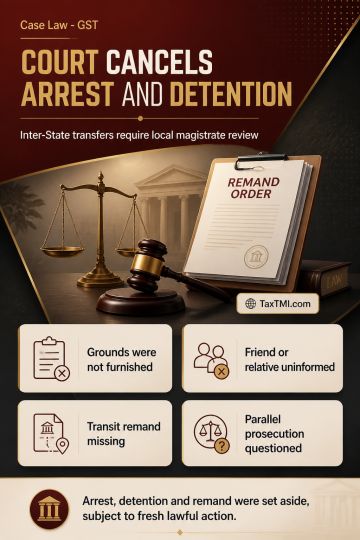
Arrest safeguards and transit remand requirements invalidated detention following inter-State transfer without communicated grounds or magistrate auth...
Arrest safeguards require disclosed grounds, relative intimation and transit remand, while duplicate prosecution under the CGST framework is unsustain...
Document Identification Number defects can invalidate GST assessments, with delayed challenges entertained conditionally where patent irregularities e...
Windmill commissioning evidence supported higher depreciation where grid connection and electricity generation proved operational use before the relev...
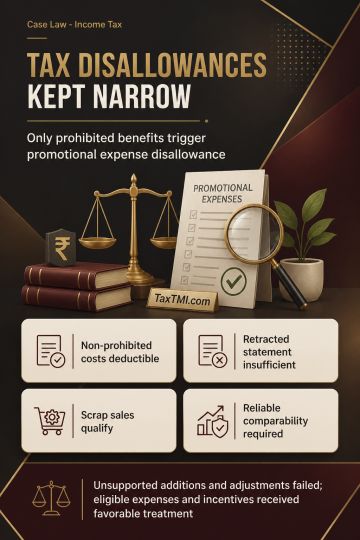
Pharmaceutical promotion and transfer-pricing comparability principles limited disallowances, while uncorroborated search allegations and unsupported ...
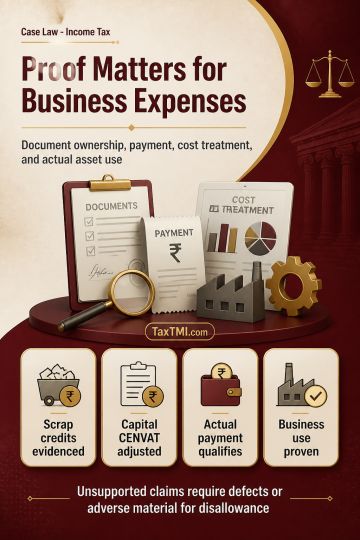
Business expenditure substantiation supports scrap credits, statutory payments and expense claims, while depreciation requires proof of actual busines...
The ITAT Bangalore considered whether an organization engaged in microfinancing activities qualified for exemption u/s 11 as a charitable entity or if its activities were commercial in nature. The tribunal emphasized that if an organization's primary activity is trade or business, it must not have a dominant profit motive and should not use charity as a cover for commercial activities. The tribunal noted that charging exorbitant interest rates akin to commercial banks indicated a profit-driven motive, making it ineligible for exemption. The organization's activities did not align with benefiting low-income groups as required for charitable status. The tribunal ruled in favor of the revenue authority, denying the organization's claim for exemption u/s 11.
The ITAT Bangalore considered whether an organization engaged in microfinancing activities qualified for exemption u/s 11 as a charitable entity or if its activities were commercial in nature. The tribunal emphasized that if an organization's primary activity is trade or business, it must not have a dominant profit motive and should not use charity as a cover for commercial activities. The tribunal noted that charging exorbitant interest rates akin to commercial banks indicated a profit-driven motive, making it ineligible for exemption. The organization's activities did not align with benefiting low-income groups as required for charitable status. The tribunal ruled in favor of the revenue authority, denying the organization's claim for exemption u/s 11.
Note: It is a system-generated summary and is for quick reference only.
 TaxTMI
 of 4792













 Join Channel


 TaxTMI