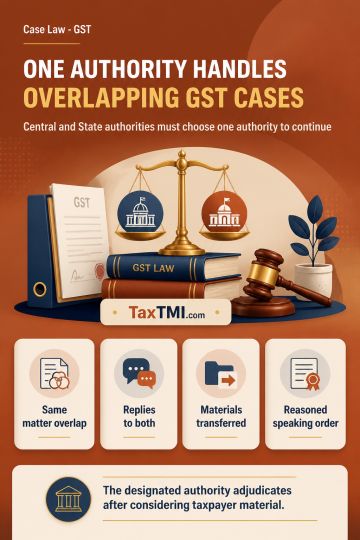
Overlapping GST proceedings require Central and State authorities to designate one competent authority for coordinated adjudication of the same matter...
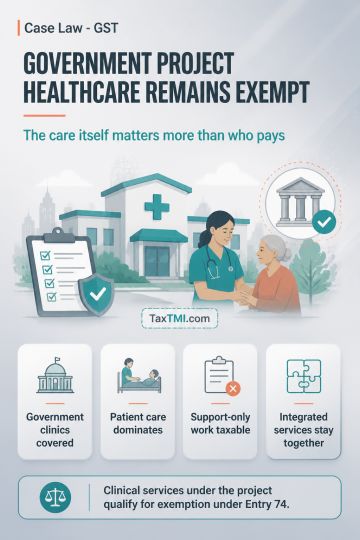
Composite healthcare supplies retain exemption when patient care is the contract's essential character, despite payment through an implementing agency...
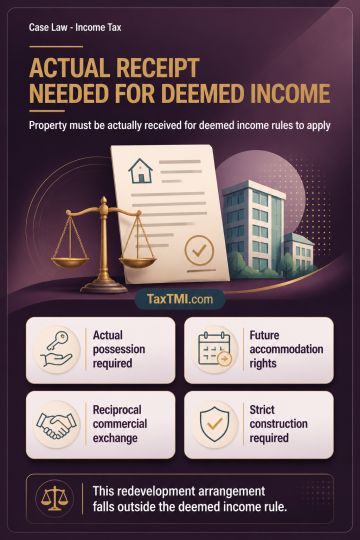
Receipt of immovable property requires actual possession or enjoyment; redevelopment allotments exchanged for tenancy rights fall outside deemed incom...
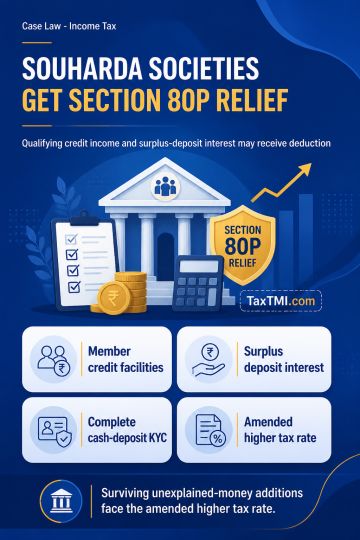
Section 80P deduction covers Souharda credit societies, including qualifying surplus-deposit interest, subject to member KYC verification for cash dep...
The High Court considered a case involving dishonour of cheque and cheating allegations u/s 138 of N.I. Act and u/s 420 IPC. The court found that there was no evidence of dishonest intention at the inception of the transaction, leading to the conclusion that the issuance of a cheque from a closed account did not establish the essential element of dishonest intention u/s 420 IPC. The court noted that the legal notice was premature, as the complainant could still file a fresh complaint u/s 138 of N.I. Act within two months. The conviction and sentence u/s 420 IPC and u/s 138 of N.I. Act were set aside, allowing for the possibility of a fresh complaint.
The High Court considered a case involving dishonour of cheque and cheating allegations u/s 138 of N.I. Act and u/s 420 IPC. The court found that there was no evidence of dishonest intention at the inception of the transaction, leading to the conclusion that the issuance of a cheque from a closed account did not establish the essential element of dishonest intention u/s 420 IPC. The court noted that the legal notice was premature, as the complainant could still file a fresh complaint u/s 138 of N.I. Act within two months. The conviction and sentence u/s 420 IPC and u/s 138 of N.I. Act were set aside, allowing for the possibility of a fresh complaint.
Note: It is a system-generated summary and is for quick reference only.
 TaxTMI
 of 4803









 Join Channel


 TaxTMI