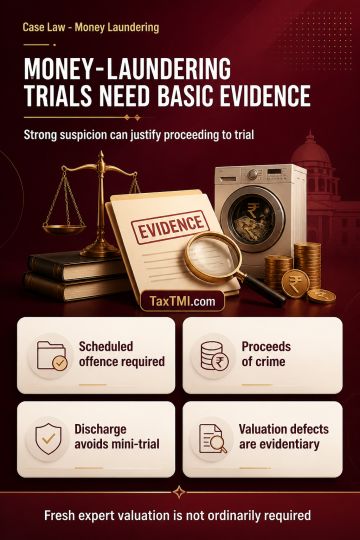
Provisional attachment of laundered funds and equivalent-value property sustained, with statutory protection limited to pension, gratuity and providen...
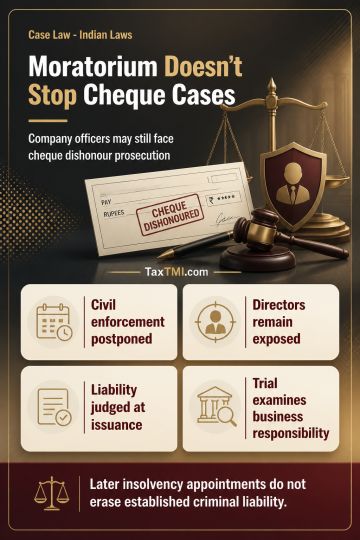
Insolvency moratorium does not shield company officers from cheque dishonour prosecution for liability arising before corporate insolvency proceedings...
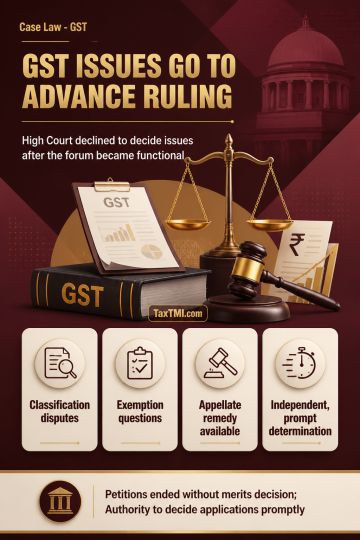
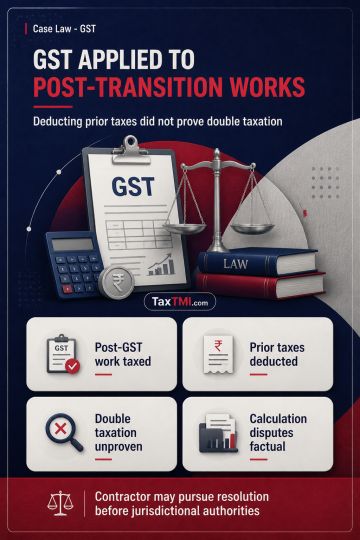
Advance-ruling mechanism governs pending GST classification, exemption and taxability disputes, limiting writ review once the specialised forum functi...
The High Court considered a case involving dishonour of cheque and cheating allegations u/s 138 of N.I. Act and u/s 420 IPC. The court found that there was no evidence of dishonest intention at the inception of the transaction, leading to the conclusion that the issuance of a cheque from a closed account did not establish the essential element of dishonest intention u/s 420 IPC. The court noted that the legal notice was premature, as the complainant could still file a fresh complaint u/s 138 of N.I. Act within two months. The conviction and sentence u/s 420 IPC and u/s 138 of N.I. Act were set aside, allowing for the possibility of a fresh complaint.
The High Court considered a case involving dishonour of cheque and cheating allegations u/s 138 of N.I. Act and u/s 420 IPC. The court found that there was no evidence of dishonest intention at the inception of the transaction, leading to the conclusion that the issuance of a cheque from a closed account did not establish the essential element of dishonest intention u/s 420 IPC. The court noted that the legal notice was premature, as the complainant could still file a fresh complaint u/s 138 of N.I. Act within two months. The conviction and sentence u/s 420 IPC and u/s 138 of N.I. Act were set aside, allowing for the possibility of a fresh complaint.
Note: It is a system-generated summary and is for quick reference only.
 TaxTMI
 of 4803












 Join Channel


 TaxTMI