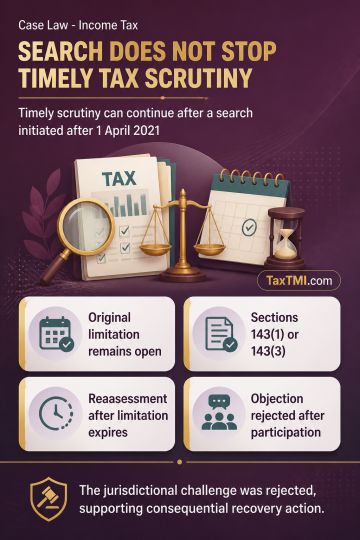
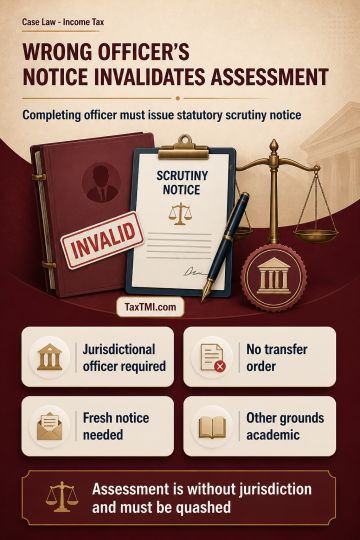
Post-search scrutiny assessment remains available where original assessment limitation is unexpired, permitting timely completion under regular assess...
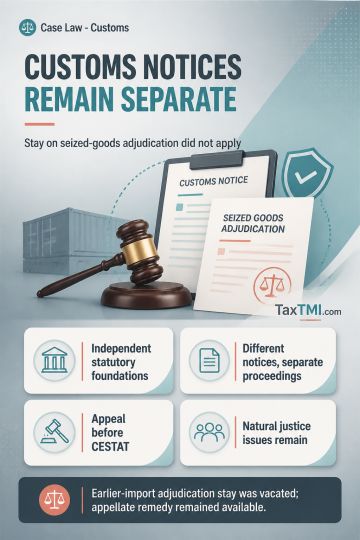
Independent show-cause notices remain separate proceedings, while customs adjudication challenges should ordinarily follow the statutory appellate rem...
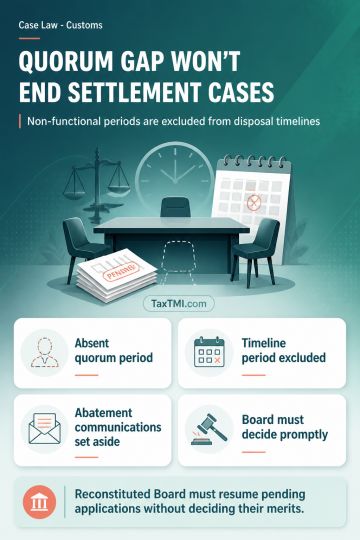
Institutional incapacity in customs settlement proceedings excludes non-functional quorum periods from statutory disposal timelines, preventing automa...
Page of 4788
Press 'Enter' after typing page number.
121 to 140 of 95749 Results
❮
❯
❯❯
0 / 200
Expand Note
Add to Folder
No Folders have been created
+
Are you sure you want to delete "My most important" ?
The ITAT Ahmedabad considered the validity of reassessment proceedings based on borrowed satisfaction by the AO. The AO alleged non-independent application of mind by the assessee in high-value financial transactions leading to unexplained cash credit u/s 68. The AO relied on an investigation report from the Income Tax Department's Investigation Wing. However, the ITAT found that the AO failed to verify double entries in the transactions and did not formulate his own "reason to believe" but relied on information from DGIT, amounting to "borrowed satisfaction." The reassessment was deemed bad in law as the AO did not have an independent reason to believe income had escaped assessment. The decision favored the assessee, following the precedent set in Varshaben Sanatbhai Patgel.
The ITAT Ahmedabad considered the validity of reassessment proceedings based on borrowed satisfaction by the AO. The AO alleged non-independent application of mind by the assessee in high-value financial transactions leading to unexplained cash credit u/s 68. The AO relied on an investigation report from the Income Tax Department's Investigation Wing. However, the ITAT found that the AO failed to verify double entries in the transactions and did not formulate his own "reason to believe" but relied on information from DGIT, amounting to "borrowed satisfaction." The reassessment was deemed bad in law as the AO did not have an independent reason to believe income had escaped assessment. The decision favored the assessee, following the precedent set in Varshaben Sanatbhai Patgel.
Note: It is a system-generated summary and is for quick reference only.
 TaxTMI
 of 4788
















 Join Channel


 TaxTMI