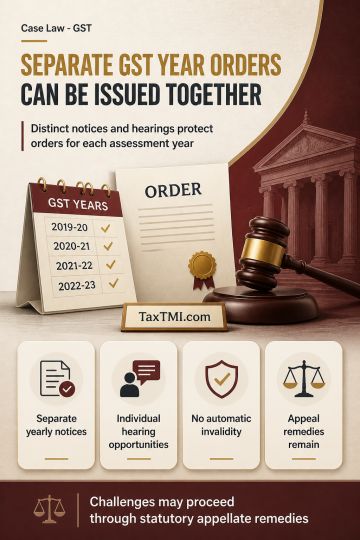
Separate assessment orders for different years remain valid when distinct notices and hearing opportunities prevent prejudice from combined proceeding...
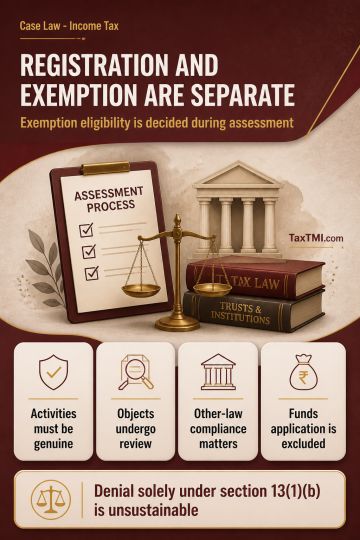
Defined public benefit can retain charitable character; registration renewal requires examining genuine activities and legal compliance, not surplus a...
Capital reduction is distinct from share buy-back, preventing buy-back tax; restructuring interest and related business deductions also survive scruti...
Transfer pricing and tax deductions upheld on established principles, while employee contributions and warranty provisions returned for fresh examinat...
Page of 4803
Press 'Enter' after typing page number.
1201 to 1220 of 96046 Results
❮
❯
❯❯
0 / 200
Expand Note
Add to Folder
No Folders have been created
+
Are you sure you want to delete "My most important" ?
The ITAT Ahmedabad considered the validity of reassessment proceedings based on borrowed satisfaction by the AO. The AO alleged non-independent application of mind by the assessee in high-value financial transactions leading to unexplained cash credit u/s 68. The AO relied on an investigation report from the Income Tax Department's Investigation Wing. However, the ITAT found that the AO failed to verify double entries in the transactions and did not formulate his own "reason to believe" but relied on information from DGIT, amounting to "borrowed satisfaction." The reassessment was deemed bad in law as the AO did not have an independent reason to believe income had escaped assessment. The decision favored the assessee, following the precedent set in Varshaben Sanatbhai Patgel.
The ITAT Ahmedabad considered the validity of reassessment proceedings based on borrowed satisfaction by the AO. The AO alleged non-independent application of mind by the assessee in high-value financial transactions leading to unexplained cash credit u/s 68. The AO relied on an investigation report from the Income Tax Department's Investigation Wing. However, the ITAT found that the AO failed to verify double entries in the transactions and did not formulate his own "reason to believe" but relied on information from DGIT, amounting to "borrowed satisfaction." The reassessment was deemed bad in law as the AO did not have an independent reason to believe income had escaped assessment. The decision favored the assessee, following the precedent set in Varshaben Sanatbhai Patgel.
Note: It is a system-generated summary and is for quick reference only.
 TaxTMI
 of 4803













 Join Channel


 TaxTMI

