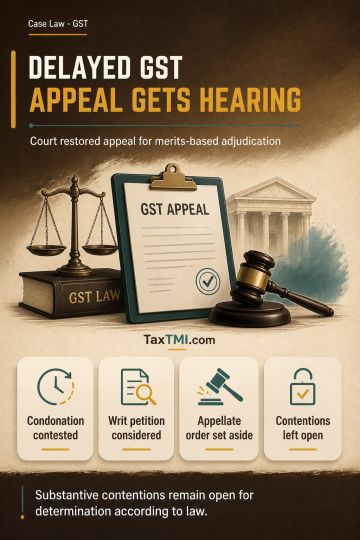
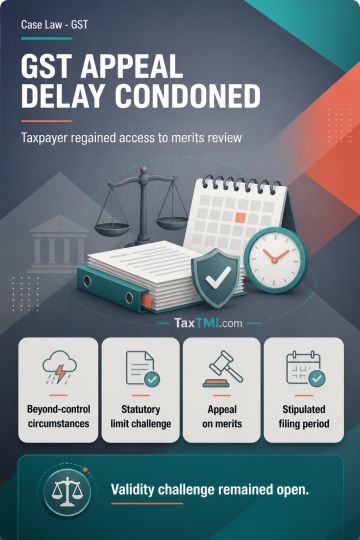
Necessary-party requirements limit impleadment of independent entities, while deferred consideration does not create an appealable adverse determinati...
Food supplement classification requires common parlance and authoritative tests, preventing treatment as proprietary Ayurvedic medicines without suppo...
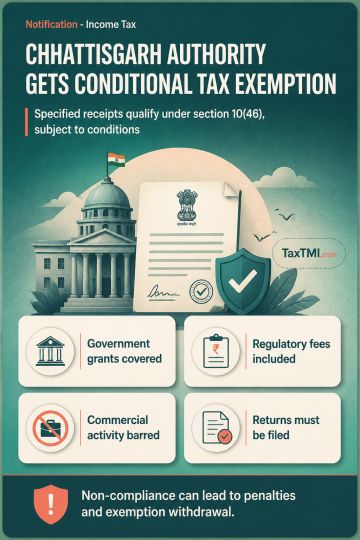
Specified regulatory authority income receives conditional tax exemption, subject to non-commercial activity, unchanged income character, and return f...
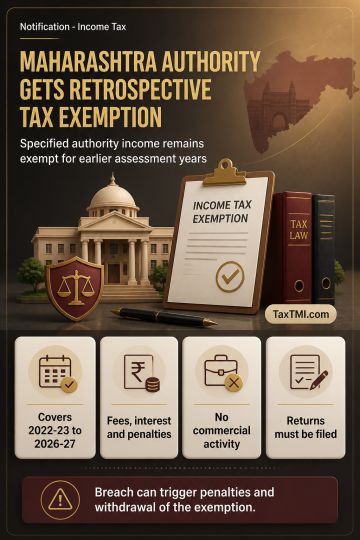
Tax exemption for regulatory authority income applies retrospectively, subject to non-commercial activity, unchanged income sources, and return-filing...
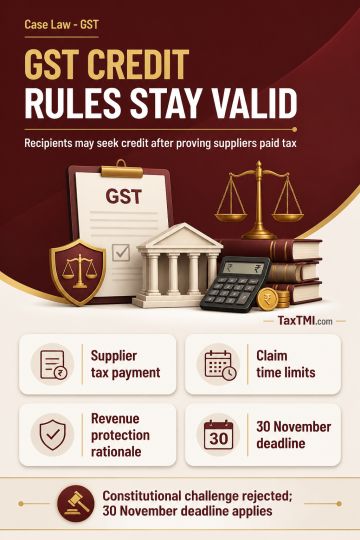
Input tax credit conditions remain constitutionally valid, with eligible recipient claims considered under GST circulars and retrospective filing dead...
The ITAT Ahmedabad considered the validity of reassessment proceedings based on borrowed satisfaction by the AO. The AO alleged non-independent application of mind by the assessee in high-value financial transactions leading to unexplained cash credit u/s 68. The AO relied on an investigation report from the Income Tax Department's Investigation Wing. However, the ITAT found that the AO failed to verify double entries in the transactions and did not formulate his own "reason to believe" but relied on information from DGIT, amounting to "borrowed satisfaction." The reassessment was deemed bad in law as the AO did not have an independent reason to believe income had escaped assessment. The decision favored the assessee, following the precedent set in Varshaben Sanatbhai Patgel.
The ITAT Ahmedabad considered the validity of reassessment proceedings based on borrowed satisfaction by the AO. The AO alleged non-independent application of mind by the assessee in high-value financial transactions leading to unexplained cash credit u/s 68. The AO relied on an investigation report from the Income Tax Department's Investigation Wing. However, the ITAT found that the AO failed to verify double entries in the transactions and did not formulate his own "reason to believe" but relied on information from DGIT, amounting to "borrowed satisfaction." The reassessment was deemed bad in law as the AO did not have an independent reason to believe income had escaped assessment. The decision favored the assessee, following the precedent set in Varshaben Sanatbhai Patgel.
Note: It is a system-generated summary and is for quick reference only.
 TaxTMI
 of 4792
















 Join Channel


 TaxTMI