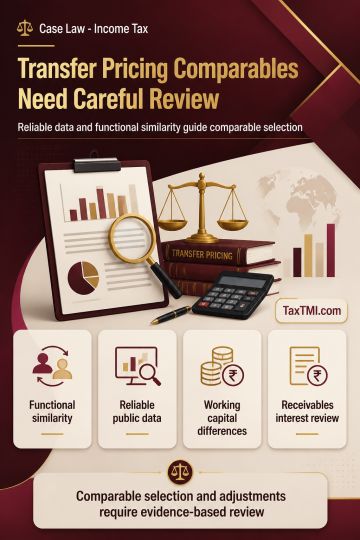
Transfer pricing comparability requires functional alignment, reliable financial data, and careful review of working capital and receivables adjustmen...
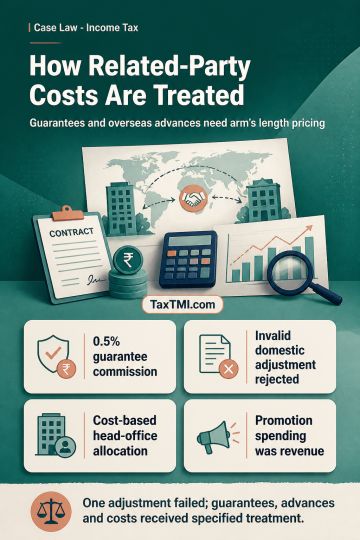
Transfer pricing rules require benchmarking corporate guarantees and associated-enterprise advances, while invalid domestic-transaction adjustments ca...
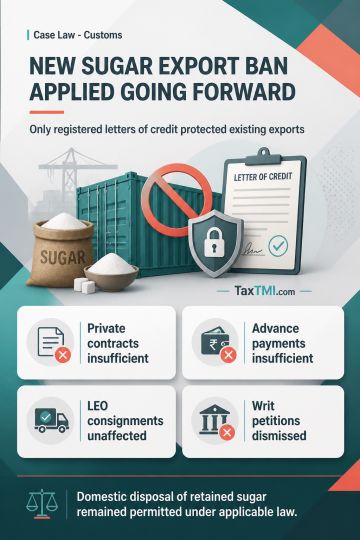
Prospective sugar export prohibition required registered letters of credit; private contracts and export quotas created no enforceable continuation ri...
Retroactive interim-moratorium exclusion permits protective asset disclosure and preservation measures against personal guarantors pending arbitration...
The ITAT Ahmedabad considered the validity of reassessment proceedings based on borrowed satisfaction by the AO. The AO alleged non-independent application of mind by the assessee in high-value financial transactions leading to unexplained cash credit u/s 68. The AO relied on an investigation report from the Income Tax Department's Investigation Wing. However, the ITAT found that the AO failed to verify double entries in the transactions and did not formulate his own "reason to believe" but relied on information from DGIT, amounting to "borrowed satisfaction." The reassessment was deemed bad in law as the AO did not have an independent reason to believe income had escaped assessment. The decision favored the assessee, following the precedent set in Varshaben Sanatbhai Patgel.
The ITAT Ahmedabad considered the validity of reassessment proceedings based on borrowed satisfaction by the AO. The AO alleged non-independent application of mind by the assessee in high-value financial transactions leading to unexplained cash credit u/s 68. The AO relied on an investigation report from the Income Tax Department's Investigation Wing. However, the ITAT found that the AO failed to verify double entries in the transactions and did not formulate his own "reason to believe" but relied on information from DGIT, amounting to "borrowed satisfaction." The reassessment was deemed bad in law as the AO did not have an independent reason to believe income had escaped assessment. The decision favored the assessee, following the precedent set in Varshaben Sanatbhai Patgel.
Note: It is a system-generated summary and is for quick reference only.
 TaxTMI
 of 4790













 Join Channel


 TaxTMI
