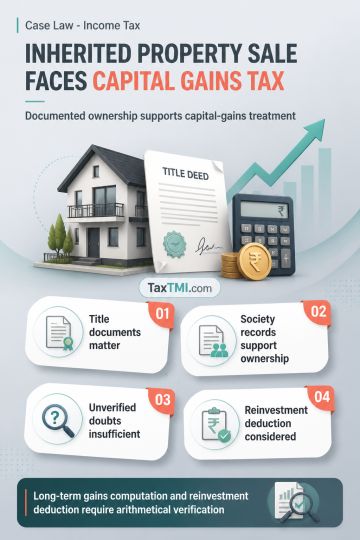
Inherited property sale proceeds require capital-gains treatment where ownership is supported by evidence, not suspicion or unverified signature doubt...
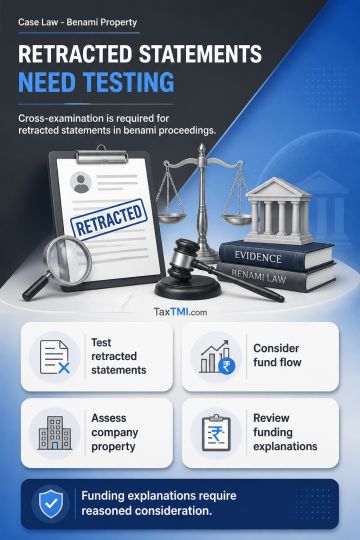
Cross-examination of retracted statements is essential where foundational evidence supports a benami allegation and documented funding explanations re...
Capital-goods exemption covers plant-modernisation accessories, while the import restriction applies only to earlier capital-goods components and spar...
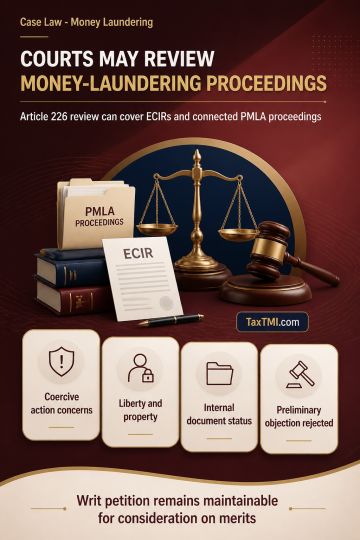
Constitutional judicial review permits challenges to ECIRs and connected money-laundering proceedings where coercive action affects fundamental intere...
The ITAT Ahmedabad considered the validity of reassessment proceedings based on borrowed satisfaction by the AO. The AO alleged non-independent application of mind by the assessee in high-value financial transactions leading to unexplained cash credit u/s 68. The AO relied on an investigation report from the Income Tax Department's Investigation Wing. However, the ITAT found that the AO failed to verify double entries in the transactions and did not formulate his own "reason to believe" but relied on information from DGIT, amounting to "borrowed satisfaction." The reassessment was deemed bad in law as the AO did not have an independent reason to believe income had escaped assessment. The decision favored the assessee, following the precedent set in Varshaben Sanatbhai Patgel.
The ITAT Ahmedabad considered the validity of reassessment proceedings based on borrowed satisfaction by the AO. The AO alleged non-independent application of mind by the assessee in high-value financial transactions leading to unexplained cash credit u/s 68. The AO relied on an investigation report from the Income Tax Department's Investigation Wing. However, the ITAT found that the AO failed to verify double entries in the transactions and did not formulate his own "reason to believe" but relied on information from DGIT, amounting to "borrowed satisfaction." The reassessment was deemed bad in law as the AO did not have an independent reason to believe income had escaped assessment. The decision favored the assessee, following the precedent set in Varshaben Sanatbhai Patgel.
Note: It is a system-generated summary and is for quick reference only.
 TaxTMI
 of 4788















 Join Channel


 TaxTMI