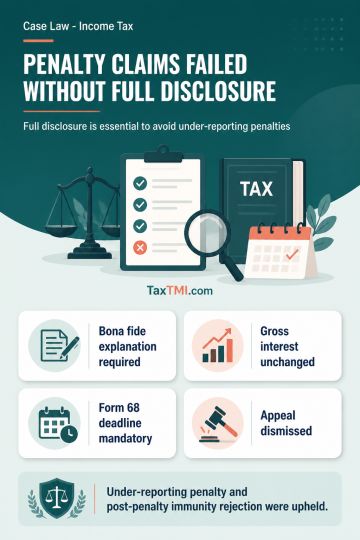
Bona fide disclosure requirements govern under-reporting penalties, and post-penalty immunity applications cannot secure available statutory protectio...
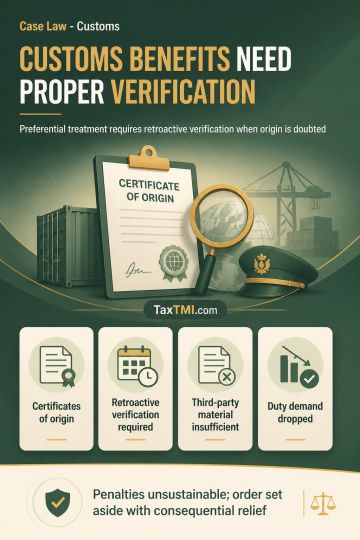
Certificate-of-origin verification procedure governs preferential customs benefits; denial without retroactive verification was set aside with consequ...
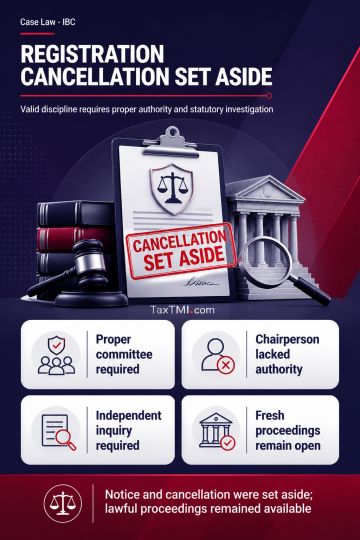
Disciplinary Committee jurisdiction and mandatory investigation requirements invalidated cancellation of an insolvency professional's registration and...
Eligibility for settlement under DTVSV Act - Delay in filing appeal - Pending appeal before ITAT - Specified date under DTVSV Act - The High Court observed that Section 2 (1) (a) (ii) of the DTVSV Act includes cases where the time limit for filing an appeal had not expired on the specified date, making the assessee eligible for settlement benefits. - The DTVSV Act is aimed at resolving tax disputes and ensuring timely revenue collection. The specified date is 31.01.2020. The legislative intent, as evident from the Finance Minister’s speech and the Statement of Objects and Reasons, was to bring finality to tax disputes and reduce litigation. Thus, the interpretation of the DTVSV Act should be liberal and purposive, extending its benefits to eligible taxpayers. - The Delhi High Court ruled in favor of the assessee, allowing the application under the DTVSV Act.
Eligibility for settlement under DTVSV Act - Delay in filing appeal - Pending appeal before ITAT - Specified date under DTVSV Act - The High Court observed that Section 2 (1) (a) (ii) of the DTVSV Act includes cases where the time limit for filing an appeal had not expired on the specified date, making the assessee eligible for settlement benefits. - The DTVSV Act is aimed at resolving tax disputes and ensuring timely revenue collection. The specified date is 31.01.2020. The legislative intent, as evident from the Finance Minister’s speech and the Statement of Objects and Reasons, was to bring finality to tax disputes and reduce litigation. Thus, the interpretation of the DTVSV Act should be liberal and purposive, extending its benefits to eligible taxpayers. - The Delhi High Court ruled in favor of the assessee, allowing the application under the DTVSV Act.
Note: It is a system-generated summary and is for quick reference only.
 TaxTMI
 of 4805






 Join Channel


 TaxTMI
