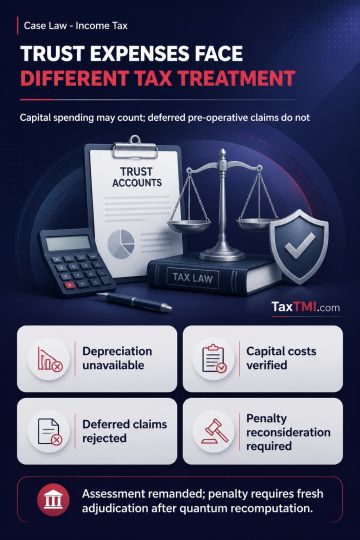
Charitable trust income application permits verified capital expenditure but rejects deferred pre-operative claims and requires reconsideration of con...
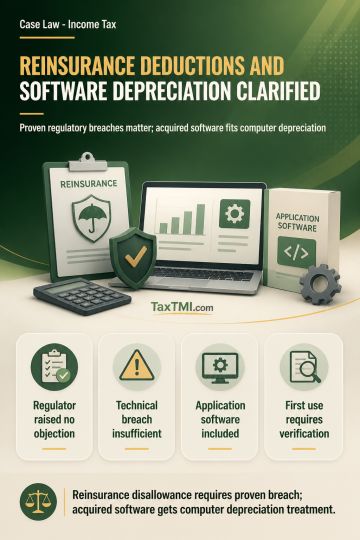
Reinsurance premium deductions require established regulatory breaches, while independently acquired software qualifies within the computer depreciati...
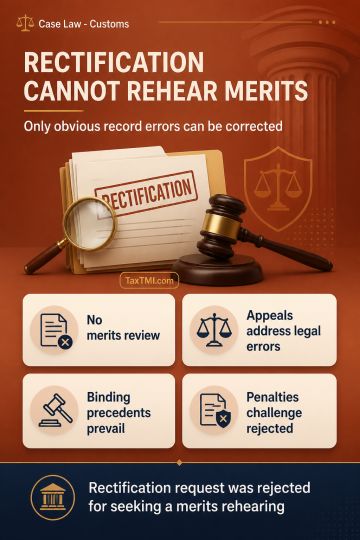
Rectification of mistake remains limited to self-evident record errors, preventing merits review through miscellaneous applications and preserving fin...
Tender creditworthiness conditions may extend to de facto Promoter Directors, with post-participation challenges generally barred absent arbitrariness...
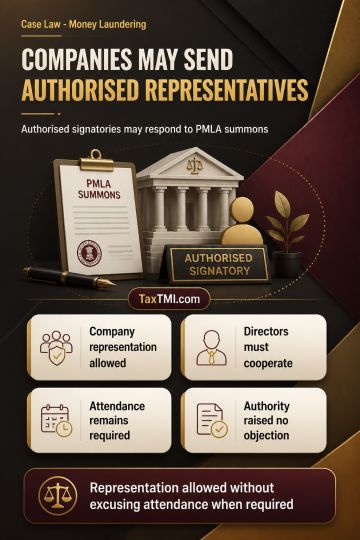
Corporate representation in PMLA summons proceedings permitted through an authorised signatory, subject to directors' continuing cooperation and atten...
Eligibility for settlement under DTVSV Act - Delay in filing appeal - Pending appeal before ITAT - Specified date under DTVSV Act - The High Court observed that Section 2 (1) (a) (ii) of the DTVSV Act includes cases where the time limit for filing an appeal had not expired on the specified date, making the assessee eligible for settlement benefits. - The DTVSV Act is aimed at resolving tax disputes and ensuring timely revenue collection. The specified date is 31.01.2020. The legislative intent, as evident from the Finance Minister’s speech and the Statement of Objects and Reasons, was to bring finality to tax disputes and reduce litigation. Thus, the interpretation of the DTVSV Act should be liberal and purposive, extending its benefits to eligible taxpayers. - The Delhi High Court ruled in favor of the assessee, allowing the application under the DTVSV Act.
Eligibility for settlement under DTVSV Act - Delay in filing appeal - Pending appeal before ITAT - Specified date under DTVSV Act - The High Court observed that Section 2 (1) (a) (ii) of the DTVSV Act includes cases where the time limit for filing an appeal had not expired on the specified date, making the assessee eligible for settlement benefits. - The DTVSV Act is aimed at resolving tax disputes and ensuring timely revenue collection. The specified date is 31.01.2020. The legislative intent, as evident from the Finance Minister’s speech and the Statement of Objects and Reasons, was to bring finality to tax disputes and reduce litigation. Thus, the interpretation of the DTVSV Act should be liberal and purposive, extending its benefits to eligible taxpayers. - The Delhi High Court ruled in favor of the assessee, allowing the application under the DTVSV Act.
Note: It is a system-generated summary and is for quick reference only.
 TaxTMI
 of 4805








 Join Channel


 TaxTMI
