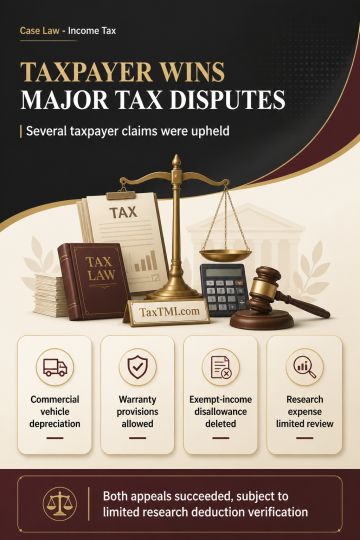
Commercial vehicle depreciation, scientifically determined warranty provisions and exempt-income disallowances were resolved in favour of the taxpayer...
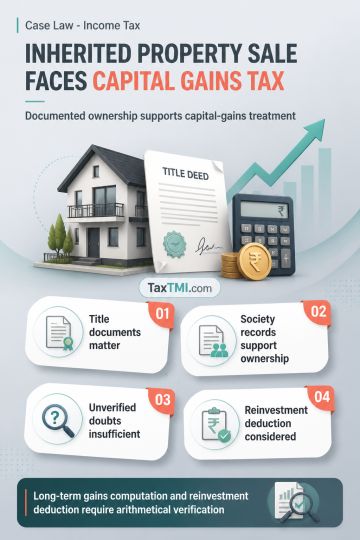
Inherited property sale proceeds require capital-gains treatment where ownership is supported by evidence, not suspicion or unverified signature doubt...
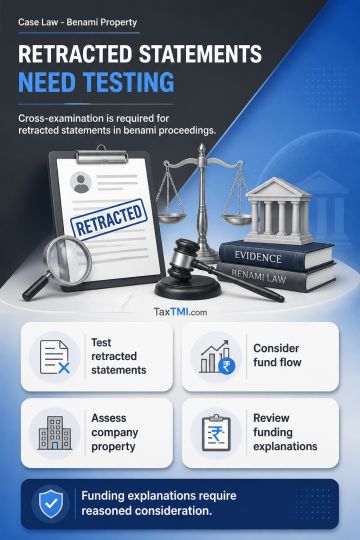
Cross-examination of retracted statements is essential where foundational evidence supports a benami allegation and documented funding explanations re...
Eligibility for settlement under DTVSV Act - Delay in filing appeal - Pending appeal before ITAT - Specified date under DTVSV Act - The High Court observed that Section 2 (1) (a) (ii) of the DTVSV Act includes cases where the time limit for filing an appeal had not expired on the specified date, making the assessee eligible for settlement benefits. - The DTVSV Act is aimed at resolving tax disputes and ensuring timely revenue collection. The specified date is 31.01.2020. The legislative intent, as evident from the Finance Minister’s speech and the Statement of Objects and Reasons, was to bring finality to tax disputes and reduce litigation. Thus, the interpretation of the DTVSV Act should be liberal and purposive, extending its benefits to eligible taxpayers. - The Delhi High Court ruled in favor of the assessee, allowing the application under the DTVSV Act.
Eligibility for settlement under DTVSV Act - Delay in filing appeal - Pending appeal before ITAT - Specified date under DTVSV Act - The High Court observed that Section 2 (1) (a) (ii) of the DTVSV Act includes cases where the time limit for filing an appeal had not expired on the specified date, making the assessee eligible for settlement benefits. - The DTVSV Act is aimed at resolving tax disputes and ensuring timely revenue collection. The specified date is 31.01.2020. The legislative intent, as evident from the Finance Minister’s speech and the Statement of Objects and Reasons, was to bring finality to tax disputes and reduce litigation. Thus, the interpretation of the DTVSV Act should be liberal and purposive, extending its benefits to eligible taxpayers. - The Delhi High Court ruled in favor of the assessee, allowing the application under the DTVSV Act.
Note: It is a system-generated summary and is for quick reference only.
 TaxTMI
 of 4803





 Join Channel


 TaxTMI